Claude agents' magnetic semiconductor candidates, explained
Claude Opus 5.5 agents predict two magnetic semiconductor candidates for future memory chips. What the simulations show, and why it isn't a discovery yet.
Source-based. Written from the documents, reporting and reviews linked in the text. Nothing here was tested hands-on by The Ruling Desk. How we work
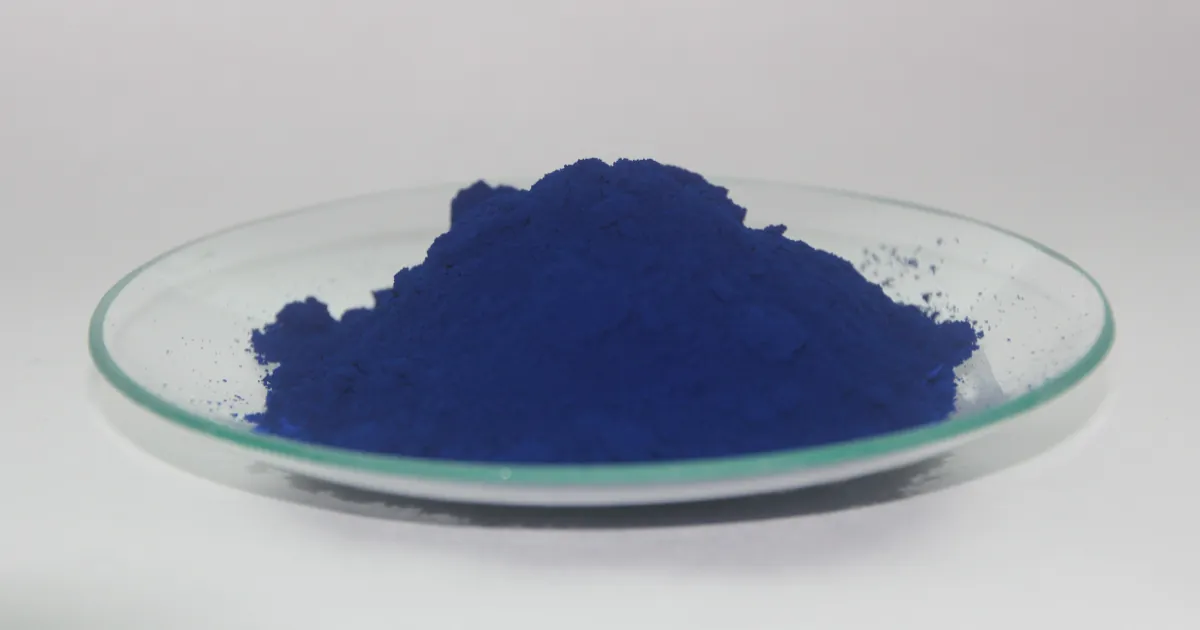
A team of Claude Opus 5.5 agents has proposed two magnetic semiconductor candidates that, on paper, could stay magnetic above room temperature while carrying no net magnetism, a combination people designing future memory chips want. AI evaluation company Vals.ai published the work on October 4, 2026. Both materials are computer predictions only: neither has been tested for these properties in a lab, and the simulations disagree with each other on one of them.
Key takeaways
- These are predictions, not discoveries. Every result comes from quantum-mechanical simulations reported by Vals.ai, and nobody has measured either material's band gap or spin behavior.
- One candidate, YBaMnFeO5, is a new design whose required atomic pattern may be impossible to make with standard methods, according to the agents' own calculations.
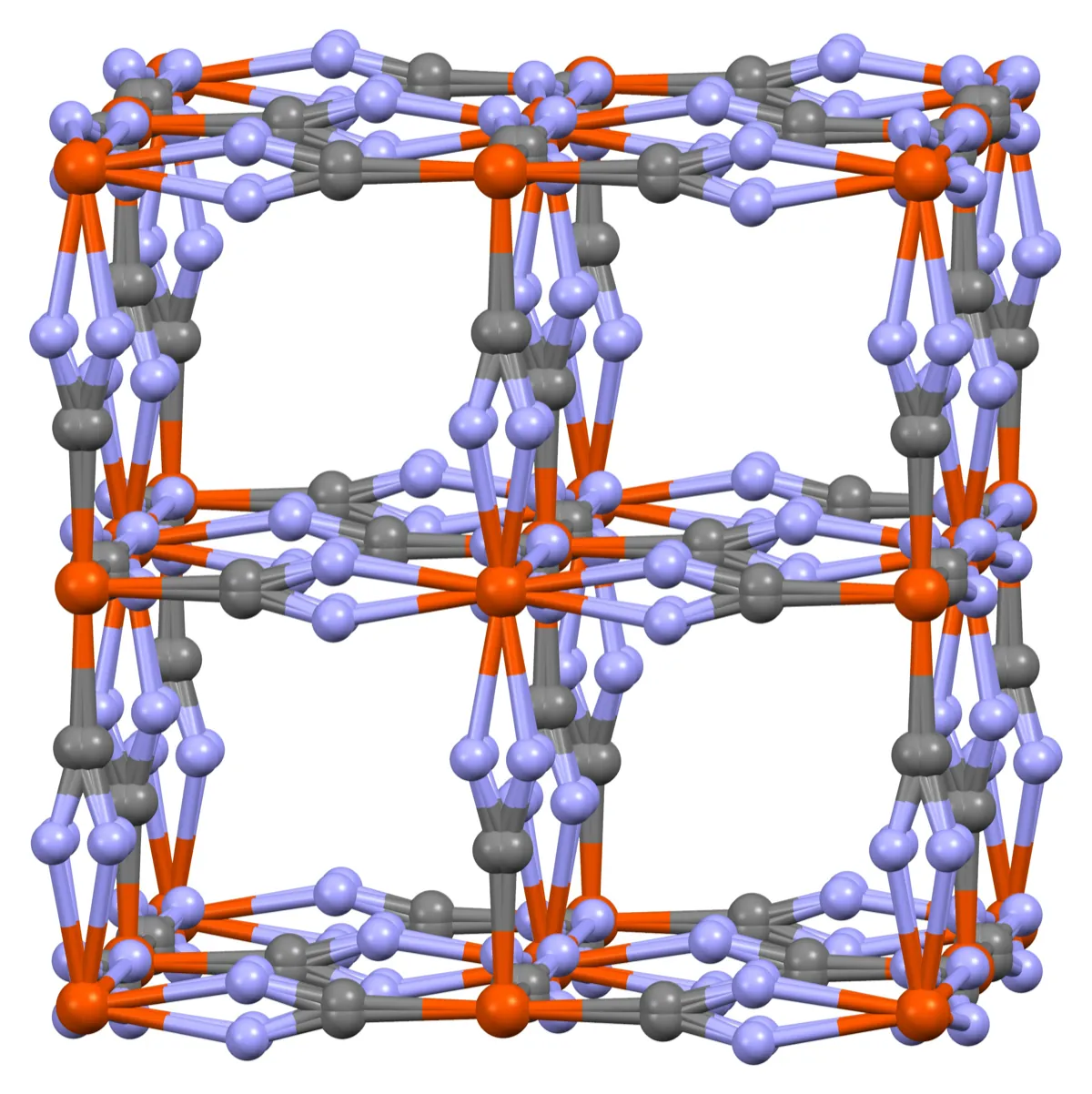
- The stronger candidate, KV[Cr(CN)6], was first made in 1999 and stayed magnetic up to 376 K (103 °C), but that only sample was a powder with water in it.
- Two simulation methods disagree on how much that water matters, and a 2008 study had already plotted part of the key effect without remarking on it.
- All inputs, raw outputs and checking scripts are public. As of October 6, 2026, we found no comment from an independent materials scientist.
What the Claude agents predicted
The Vals.ai post, written by Geby Jaff, describes "a team of Claude Opus 5.5 agents" hunting for an unusual kind of magnet. The fuller write-up in the project's public ledger says several agents ran in parallel from October 1 to 4, each on a different lane of a broader search. The lane behind this result submitted about 750 computing jobs over three days. A human set the goals, steered the search and decided what to publish.
The agents worked with checks built in. Before each decisive calculation they wrote down what result would kill the idea, and separate "referee" agents tried to knock down each claim. Several claims were retracted along the way, and the ledger keeps that record.
Candidate 1: a new design that may not be buildable
YBaMnFeO5 is a layered oxide the agents designed, with manganese and iron arranged in a perfect 3D checkerboard. The simulations give it a band gap of 2.35 eV and magnetic order up to about 420 K, or about 490 K after calibration. The catch, per the ledger's write-up: the checkerboard scrambles at around 950 K, while making this kind of oxide usually means heating it to roughly 900 to 1,300 °C. Swapping a single manganese and iron pair in the model shrank the gap from about 1.3 eV to almost nothing. The agents' own review downgraded it to "design study, not a realizable discovery."
Candidate 2: a 1999 material with a new reading
KV[Cr(CN)6] belongs to the Prussian blue family, the old pigment. Chemists Stephen Holmes and Gregory Girolami made it in 1999 and measured magnetic order up to 376 K, or 365 K after heating. The agents calculated that a perfect, dry crystal would have a band gap of about 2.1 eV with electrons sorted by spin at both edges of that gap. The agents' review called it a solid "identification plus numbers, not a breakthrough."
Why magnetic semiconductor candidates like these matter
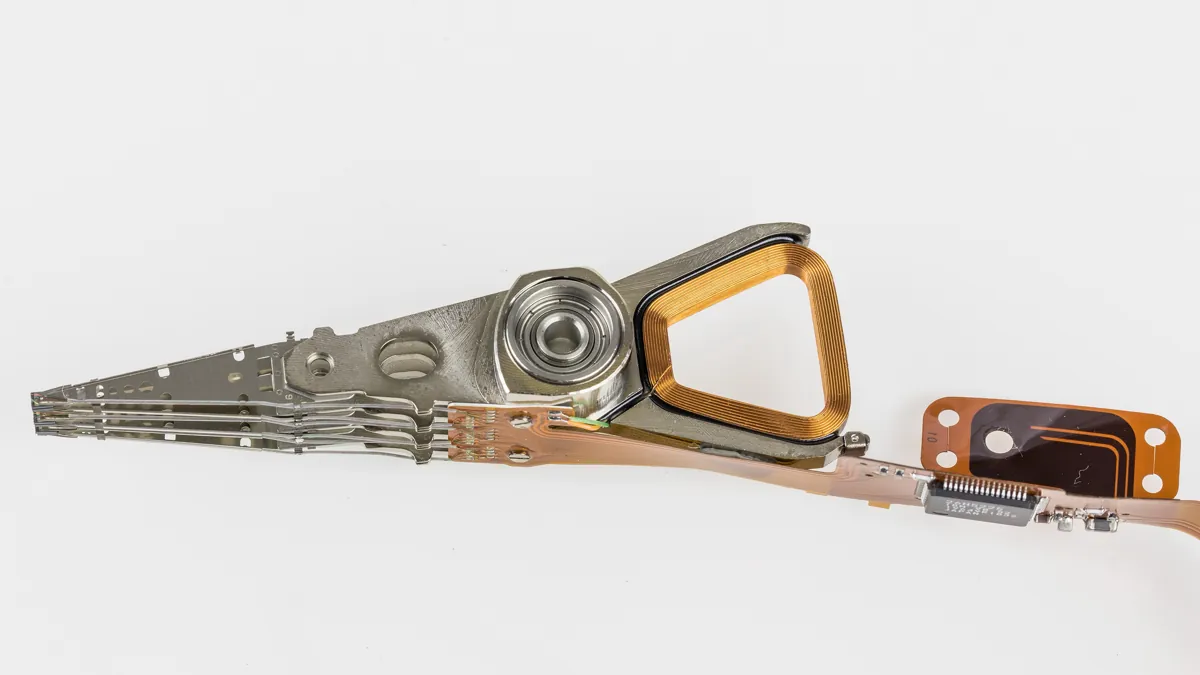
Electrons carry spin, which makes each one a tiny magnet pointing up or down. Spintronics uses that spin to store and read data, as in hard drive read heads and MRAM memory. Ferromagnets, the fridge-magnet kind, sort electrons by spin but leak stray fields that disturb their neighbors. Antiferromagnets cancel out internally, so they have no stray field, but normally don't sort spins.
Physicists have been chasing materials that do both. EPFL's explainer on altermagnets, one such family, describes the goal as zero net magnetization with the strong spin effects of ferromagnets, so memory bits could be packed tightly without crosstalk. The agents searched a related family called Luttinger-compensated magnets, where two different magnetic atoms cancel exactly. The ledger says very few real examples are known, and that the only one confirmed as an insulator by neutron experiments orders at about -225 °C. A room-temperature semiconductor version would be a real step, if it holds up.
What DFT can and can't tell you
The agents used density functional theory, or DFT: the standard way to compute, from quantum mechanics plus approximations, how electrons arrange themselves in a crystal. They ran it with the free Quantum ESPRESSO program on Modal's cloud computers, using two approximations. PBE+U is fast and has a tunable knob; HSE06 is slower and usually more accurate.
DFT is good at telling you which ideas are worth a lab's time. It's not a measurement. The ledger itself lists the limits:
- The results are for ideal crystals at zero temperature.
- Both methods can misplace energy levels by tenths of an electronvolt.
- The two methods disagree on KV[Cr(CN)6] with water added: HSE06 keeps the hole "spin window" at 2.31 eV, while PBE+U shrinks it to 0.93 eV, less than half its 2.02 eV dry value. The authors favor HSE06 here, but call the question unresolved.
- At room temperature, close to its 376 K limit, the 1999 material's magnetic order is only about 60% complete, which would dilute the effect.
The ledger also flags its own mistakes. Rechecking the raw files turned up five errors or omissions, including a stability figure that went from 2.6 to 13.7 meV per atom. It also found that the agents' literature search missed a 2008 hybrid-functional study whose spin-resolved plot already showed the same-spin band edges. The novelty claim was narrowed to pointing out the effect, putting numbers on it and testing how robust it is.
What lab work would have to confirm
The write-up names three experiments, cheapest first:
- Make KV[Cr(CN)6] again and measure its composition and magnetization. The 1999 sample had a small leftover magnetism, about 2% of full alignment.
- Element-specific X-ray magnetic measurements at the vanadium and chromium edges, plus magneto-optics, to show the two magnetic halves canceling while the spin signal stays.
- Spin-resolved photoemission, which knocks electrons out with light and reads their spin. The prediction is essentially one spin across the top 2 eV of filled states.
Until then, "semiconductor" is a paper label too: nobody has measured this compound's conductivity.
How this compares with earlier AI-for-science claims
The pattern is familiar. In 2023, Google DeepMind's GNoME project reported 2.2 million new crystal structures in Nature, and UC Santa Barbara chemists Anthony Cheetham and Ram Seshadri later argued that many lacked real novelty or a demonstrated use. Last month, Anthropic's own Claude enzyme discovery claim also rested on an unreviewed preprint.
This project is smaller and more modest. It proposes two candidates, grades both conservatively and publishes nearly 900 calculation inputs with their raw outputs, plus a checker that reported 58 claims passing and none failing as of October 4. It's still a blog post with a data repository, not a peer-reviewed paper, and no outside expert has weighed in publicly yet.
Bottom line
Claude agents produced two well-documented magnetic semiconductor candidates, not a new material for your next laptop. YBaMnFeO5 is a blueprint the agents themselves doubt can be built. KV[Cr(CN)6] is the one to watch: it already exists, and a single synthesis plus a few measurements could confirm or sink the prediction. The useful part for now is the method: open data, self-criticism and clear labels. Follow more AI coverage as labs respond.
FAQ
Did AI discover a new room-temperature magnet?
No. The agents predicted, using simulations, that two materials could behave as room-temperature magnetic semiconductors with zero net magnetism. One already existed and was known to be magnetic above room temperature; the new part is the predicted spin sorting, which nobody has measured.
What is a room-temperature magnetic semiconductor?
It's a material that stays magnetically ordered above everyday temperatures and has a band gap like silicon, so its charge carriers can be controlled. If its electrons are also sorted by spin, it could store and move information using spin, the idea behind spintronics.
Can I check the calculations myself?
Yes. The ledger includes the inputs, raw outputs and a script that recomputes most numbers on a laptop in seconds. Rerunning the full quantum calculations takes cluster or cloud computing time.