Claude enzyme discovery: what ART is and what's unproven
Anthropic says Claude agents found ART, a CRISPR-like system in phage DNA. The Claude enzyme discovery explained, and what its unreviewed preprint hasn't shown.
Source-based. Written from the documents, reporting and reviews linked in the text. Nothing here was tested hands-on by The Ruling Desk. How we work
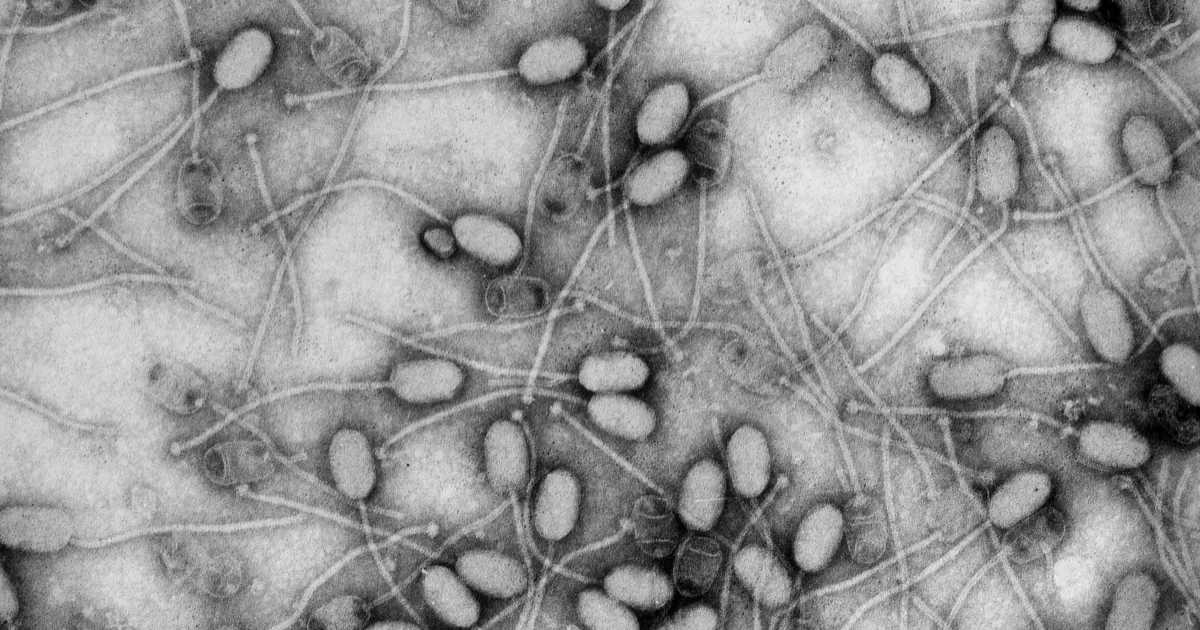
The Claude enzyme discovery Anthropic announced on September 23, 2026 is a family of viral genes its AI agents flagged in DNA from bacteriophages, the viruses that infect bacteria. Anthropic calls it ART, short for array-associated reverse transcriptases, and says its layout resembles a CRISPR array. That is Anthropic's own claim, made in a preprint written by six of its staff that had not been peer reviewed as of September 24, 2026, and nobody yet knows what the system does.
Key takeaways
- The finding is Anthropic's claim, published in its own preprint, not in a peer-reviewed journal. Anthropic sells Claude, so it has a stake in the result.
- About 950 Claude agent sessions ran for roughly 21 hours without human intervention and surfaced ART among 19 reports, according to the preprint. Humans then did the follow-up analysis and the lab work.
- ART pairs a reverse transcriptase, an enzyme that copies RNA into DNA, with a partner gene and a row of repeated DNA units. The enzyme itself was already known; the repeats and the partner were not described before.
- Its function is unknown. The authors say they have not shown the enzyme is active or what the system does for the virus.
- An outside CRISPR pioneer called it "genuinely intriguing," while another microbiologist said nothing suggests it rivals CRISPR gene editing.
What ART is, in plain words
Start with the parts. A reverse transcriptase, or RT, is an enzyme that turns RNA back into DNA. HIV uses one, and labs use them every day. Bacteria carry their own RTs, often next to a helper protein and a short RNA, in systems that help them fight off viruses.
ART, as Anthropic describes it in its announcement, has three parts: the RT, a partner protein of unknown function, and an array of evenly spaced, non-coding DNA repeats sitting just upstream of the RT gene. It turns up mostly in jumbo phages, bacteriophages with unusually large genomes.
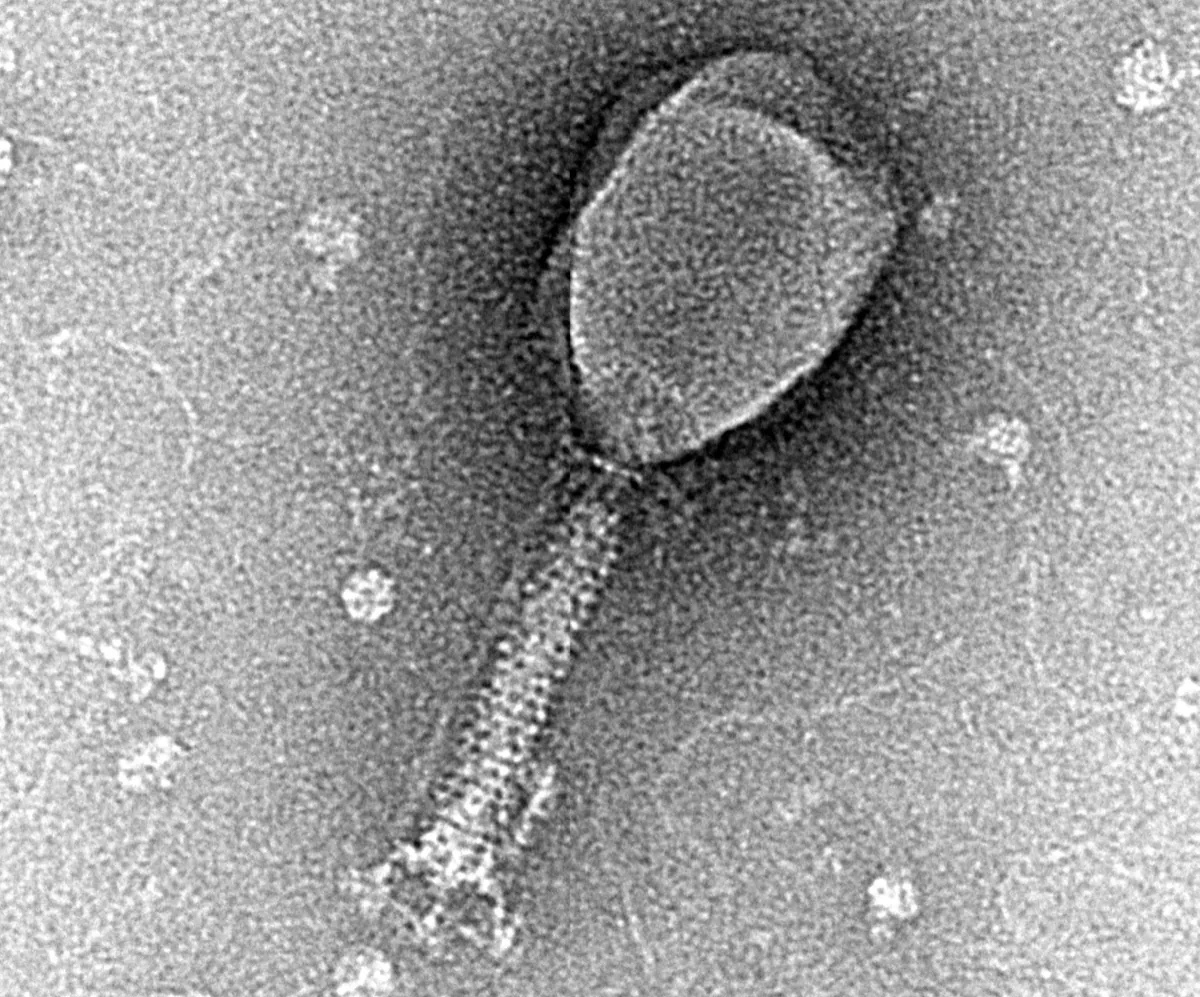
The preprint gives the numbers. Its authors found 95 distinct ART enzyme clusters in cultured phages and viral DNA, 28 of them with a detectable repeat array. Those arrays hold 3 to 21 copies of a repeat 15 to 49 letters long, separated by unique stretches of 120 to 220 letters. No CRISPR-associated genes sit nearby.
Why it gets called CRISPR-like
In bacteria, a CRISPR array is a row of identical repeats separated by short "spacers," each one a snippet that lets the cell recognize a virus. That bank of different RNAs is what makes CRISPR programmable, and it's why a similar-looking row of repeats gets attention.
The resemblance has limits, and the preprint spells them out. CRISPR spacers are about 30 letters long and get gained and lost between related strains. ART's units are several times longer and stay in the same order between related phages. The authors call it "a new type of non-coding repeat element," not a new CRISPR.
Their best guess, which they label a hypothesis, is that ART works like a retron, a known bacterial defense system in which an RT, a single RNA and a partner protein sit in an inactive complex until an infection sets them off. ART would carry a whole bank of different RNAs instead of one. The same preprint also notes that another team recently found RNA arrays beside an unrelated RT family, so this layout seems to have evolved more than once.
What the Claude agents actually did
Anthropic's post gives rounded figures: roughly 950 agents, 21 hours, 210 million tokens, more than 200,000 RTs, 3,500 candidate systems and 20 reports. The preprint is more precise. Running Claude Code with a model it calls Claude Mythos 5, the harness logged:
| Step | What the preprint reports |
|---|---|
| Search space | 1.94 billion metagenomic protein clusters |
| RTs recovered | 198,290 RT clusters, sorted into 9 classes |
| Candidate partner families scored | 3,564, from about 11,000 RT neighborhoods |
| Families investigated in depth | 17 (16 selected, 1 added by an agent's follow-up) |
| Work done | 119 tasks, 98 of them opened by the agents themselves |
| Effort | 949 agent sessions, 77 agent-hours, 215.6 million tokens, 21.5 hours of wall-clock time |
| Output | 19 written reports for human review |
The telling moment came from a detour. The brief asked for new partner genes, not DNA repeats. One agent dropped its original lead, queued a closer look at the enzyme, and a later agent read the raw DNA upstream of it and wrote: "I can see by eye a tandem repeat array." It then checked the pattern against known systems, including CRISPR, and filed a report.
Most of what the agents surfaced didn't hold up. Of the 17 candidate families, only 3 turned out to be new RT partnerships; the other 14 were artifacts or parts of systems already described. ART came from a separate observation about the DNA, not from that scoring.
What humans did, and what the wet lab showed
After the agents finished, a Claude model ranked the 19 reports in a head-to-head tournament, and Anthropic's scientists picked ART from the top of that list. They used Claude in interactive sessions to find more members of the family, and they did the lab work. Anthropic's post says "all of the lab work is performed by human scientists" in its Bay Area lab, which handles only biosafety levels 1 and 2. The company's head of life sciences, Eric Kauderer-Abrams, a co-author of the preprint, confirmed the lab to TechCrunch on September 18.
The evidence so far comes in two parts. First, reanalyzing public RNA data from a 2022 study of Staphylococcus phage SA1, the team found the array's RNAs made up to 8% of the phage's RNA 15 minutes into an infection. Second, in its own experiment, it put the SA1 system into E. coli and saw the array cut into distinct short RNAs.
The enzyme wasn't new. A 2021 genome report on the jumbo phage MarsHill already identified the RT and proposed an RNA upstream, but, as the preprint notes, it described neither the repeats nor the partner gene. That's the basis for Anthropic's careful wording that Claude "appears to be the first" to notice them.
What the Claude enzyme discovery hasn't proven yet
The authors are blunt: "we have not shown that the RT is active or that the unit RNAs are its substrates," and whether the RT and partner interact, and what the system does for the phage, "are currently unknown." Anthropic says work on ART's function is ongoing.
There's a repeatability caveat too. The team reran the same agent campaign ten more times, and none of the reruns spotted the array. In separate tests where models got the ART DNA directly, the strongest models, including Claude Opus 5.5, described the array in at least 90% of attempts, but that fell as low as 32% when the DNA came as files with tools, because the models often never read enough raw sequence.
Outside reaction is split. Feng Zhang of MIT and the Broad Institute, who reviewed an early copy, said in Anthropic's post that finding RNA-repeat arrays next to reverse transcriptases "is genuinely intriguing and merits further investigation." Speaking to Al Jazeera, Stanford bioengineer Stanley Qi praised the pattern recognition, while Washington University microbiologist Kevin Blake said there's "nothing to indicate this is a rival to CRISPR-the-technology."
What it means for you
If you follow AI, the interesting part isn't a cure or a new gene editor, because nothing like that is on the table. It's that a general-purpose model, left alone with a database, read raw DNA, noticed something odd outside its brief and chased it, and that humans could trace why from the transcripts.
That fits a wider push toward AI agents that work for hours without supervision; for a consumer-facing take on agents, see Meta's Muse agent. But one successful run out of eleven is a reminder that these systems are not yet reliable discovery machines.
Bottom line
The Claude enzyme discovery looks like a real, previously undescribed arrangement of genes in jumbo phages, and the agent transcripts make a credible case that Claude spotted it. But as of September 24, 2026, that is Anthropic's claim in a preprint that has not been peer reviewed, about a system whose function nobody knows. Watch for the lab results on whether the enzyme is active, for independent groups to reproduce the finding, and for a journal to publish it. Until then, treat "CRISPR-like" as a description of a pattern, not a promise of a tool.
FAQ
What is ART in biology?
ART stands for array-associated reverse transcriptases, a name Anthropic's researchers gave to a family of phage genes. Each system pairs a reverse transcriptase with a partner gene and an upstream row of repeated DNA units. Its function is still unknown.
Did Claude discover a new CRISPR?
No. ART's repeat array looks somewhat like a CRISPR array, but it has no CRISPR-associated genes nearby and differs in spacer length and behavior. Nothing published so far shows it can edit genes.
Has the Claude enzyme discovery been peer reviewed?
Not as of September 24, 2026. Anthropic released the findings as a preprint on its own website, written by its own researchers, with feedback from outside scientists including Feng Zhang on an early copy.
What did humans do in the discovery?
Humans wrote the research brief, reviewed the agents' top-ranked reports, chose ART to follow up, extended the analysis with Claude's help, and ran the lab experiments. The agents did the database search and flagged the repeats without human intervention.