Apple Taction verdict: why Apple owes $5.7B over haptics
The Apple Taction verdict: a jury says the Taptic Engine infringes two haptics patents. What they claim, how big $5.7B is, and whether iPhone buyers feel it.
Source-based. Written from the documents, reporting and reviews linked in the text. Nothing here was tested hands-on by The Ruling Desk. How we work
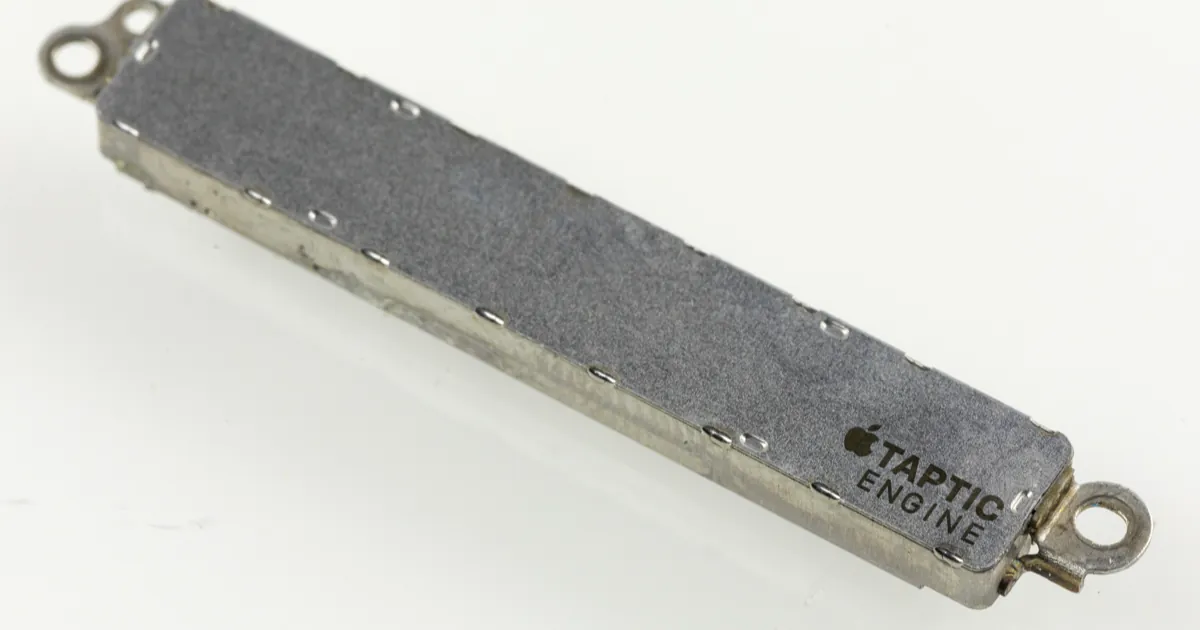
The Apple Taction verdict is in: on Friday, September 25, 2026, a federal jury in San Diego found that the Taptic Engine inside iPhones and Apple Watches infringes two haptics patents owned by Taction Technology, and awarded Taction $5,721,961,750. The jury also found the infringement was not willful. Apple says its technology is different and that it will appeal, so as of September 27 nobody has paid anything.
Key takeaways
- A jury found infringement of three patent claims across US patents 10,659,885 and 10,820,117, and rejected Apple's argument that those claims are invalid.
- Reuters calls $5.7 billion the largest US verdict of its kind. None of the reports we read explains how the jury reached the figure, such as a royalty per device.
- The jury found the infringement wasn't willful. Under US patent law, judges generally save enhanced damages, up to triple, for willful infringement.
- Apple says it "will appeal." Big patent verdicts can be cut or thrown out after trial, as Intel's $2.18 billion loss to VLSI was, so the final number could be very different.
- Nothing changes for iPhone or Apple Watch owners today: no report we read mentions an order to stop sales.
What the jury decided
Taction sued in 2021 in the US District Court for the Southern District of California (case docket). The trial ran before US District Judge Todd W. Robinson, and the jury deliberated over parts of two days, Law Commentary reports. Jurors found that Apple infringed claims 17 and 19 of the '885 patent and claim 16 of the '117 patent, and rejected Apple's invalidity defense, iClarified reports.
Apple's statement, via AppleInsider: "Apple's Taptic Engine is fundamentally different from Taction's technology, which Taction's own testing of Apple's products confirmed during trial. Apple does not use Taction's technology, and we will appeal." Taction attorney Lance Yang said the company was happy the jury "vindicated its patent rights."
What the two haptics patents claim
Both patents trace back to the same 2014 application by Taction founder Silmon James Biggs and share one title about "damped electromagnetically actuated planar motion." Patent 10,659,885 was granted on May 19, 2020, and patent 10,820,117 on October 27, 2020. Google Patents lists both as expiring on September 24, 2035.
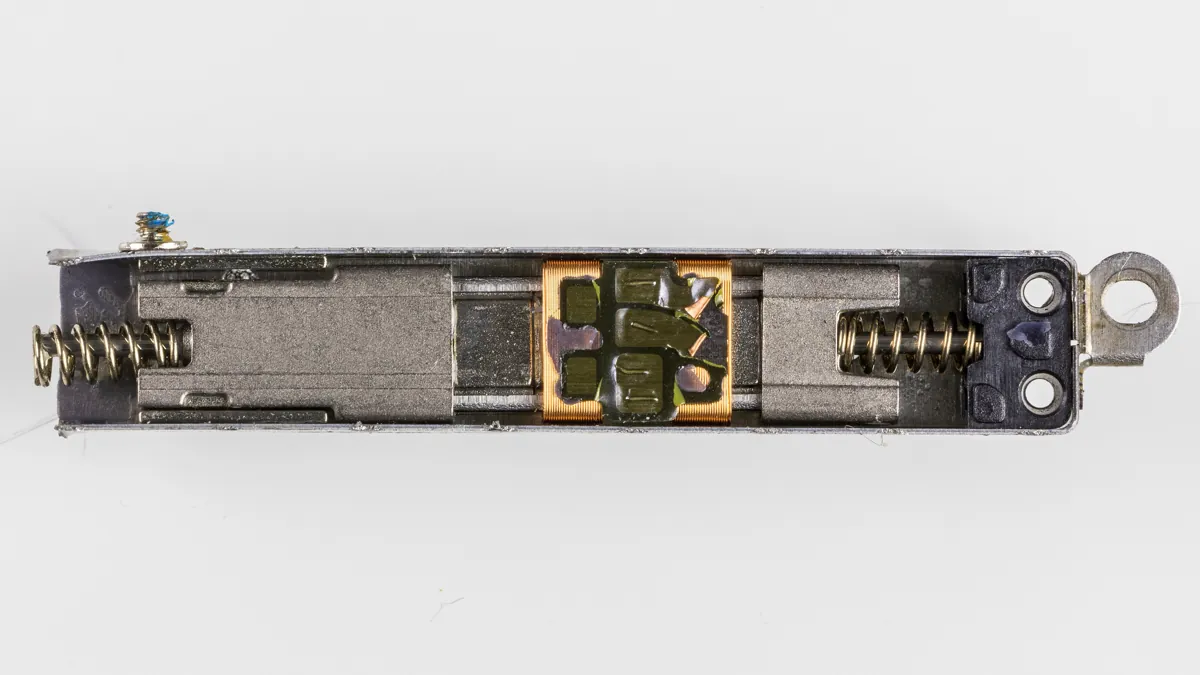
In plain words, the claims describe a small, flat vibration motor:
- A weight with magnets that slides back and forth in one plane, driven by electric coils.
- Flexible springs (flexures) that let the weight slide sideways but resist movement in other directions.
- Ferrofluid, a magnetic liquid, touching the moving weight to damp it, so the buzz stays even instead of ringing at one frequency. Claim 17 of the '885 patent ties that damping to the 40 to 200 Hz range.
The patents were written around headphones that let you feel bass. In its 2021 complaint, Taction argued that Apple's newer Taptic Engines use flexures and magnetic ferrofluid in the same way, AppleInsider reported at the time.
Who Taction is and why the litigation funding matters
Taction is a San Diego company that makes audio and gaming gear with haptic feedback, Engadget notes. Its own site says its "Transporter" haptic driver powers Corsair's HS60 Haptic gaming headset, and it thanks the early backers of its Kannon headphones.
The lawsuit has outside money behind it. Bloomberg Law identifies two litigation funders, Gronostaj Investments LLC and Kenosha Investments LP, the second described as an indirect subsidiary of Burford Capital. Funders pay legal costs in exchange for a share of any recovery. The terms here aren't public, but backing like this is how a company Taction's size can fight Apple through years of appeals.
Why the Taptic Engine case took five years
A judge first sided with Apple: in 2023 the district court construed the claims narrowly, struck Taction's expert infringement opinion and granted Apple summary judgment of noninfringement. On August 13, 2025, the Federal Circuit vacated that ruling, finding the court had wrongly excluded the expert opinion and partly misread the claims, IPWatchdog reports. The case went back to San Diego for trial in September 2026.
What happens next
- Post-trial motions. Once judgment is entered, Apple can ask Judge Robinson to overturn the verdict or order a new trial. Under federal rules, a renewed motion for judgment as a matter of law is due within 28 days of judgment.
- An appeal. Apple has said it will appeal, which goes to the Federal Circuit, the same court that revived the case.
- The number can shrink. In 2023 the Federal Circuit threw out VLSI's $2.18 billion verdict against Intel and ordered a new damages trial, Patently-O explains. Our inference: an appeal here could take years.
What the Apple Taction verdict means for iPhone and Apple Watch owners
For now, nothing. Your iPhone and Apple Watch keep working, and Apple keeps selling them. The 2021 complaint asked for damages and court costs, according to AppleInsider, and none of the reports we read mentions a request to block sales. The reports also don't say how the court will treat sales after the verdict, since the patents run until 2035. More coverage lives in our tech section and on the patents tag.
Bottom line
The Apple Taction verdict says Apple's Taptic Engine uses Taction's damped vibration motor and puts the bill at $5.7 billion, without willful infringement. That's a verdict, not a final payment: watch for Judge Robinson's rulings on Apple's post-trial motions and then the Federal Circuit appeal. If you own an iPhone or Apple Watch, you don't need to do anything.
FAQ
Does Apple have to pay $5.7 billion now?
No. The verdict still has to become a judgment, and Apple can challenge it before Judge Robinson and then appeal to the Federal Circuit. Apple says it will appeal, so a payment, if any, could be years away, and the amount could change.
What is the Taptic Engine?
It's the part inside iPhones and Apple Watches that produces taps and vibrations, such as the click you feel on some buttons and alerts. The jury found that it infringes three claims in Taction's two patents; Apple says its design is fundamentally different.
Will Apple stop selling iPhones or Apple Watches?
No report we read mentions an injunction or a request for one, and Apple is still selling both. So far, the case is about money.