Starship Flight 14 reaches orbit, splashes down early
Starship Flight 14 reached orbit, deployed all 26 Starlink V3 satellites and splashed down about 7 hours early. What happened, and what's still unclear.
Source-based. Written from the documents, reporting and reviews linked in the text. Nothing here was tested hands-on by The Ruling Desk. How we work
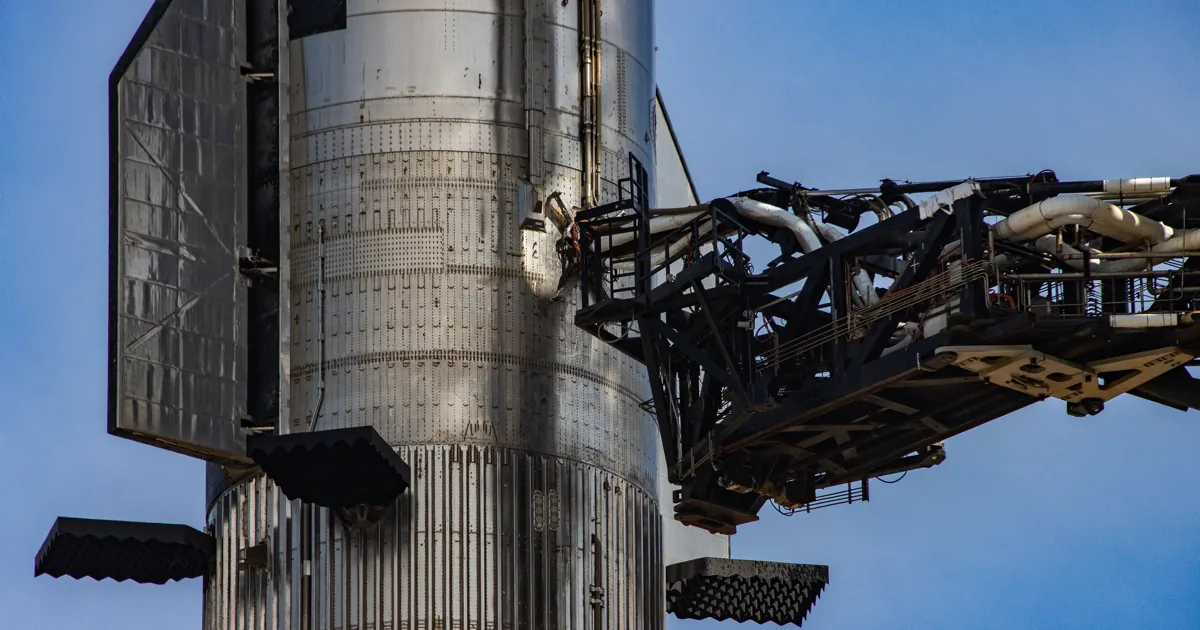
Starship Flight 14 reached orbit on Monday, September 28, 2026, released all 26 of its Starlink V3 satellites, and then came home hours ahead of plan: SpaceX cut the planned 10-hour mission short after its first orbital checkpoint, and Ship 41 splashed down in the northern Pacific at about 11:58 a.m. EDT. It lifted off from Starbase, Texas, at 8:49 a.m. EDT and lost one ship engine on the way up. As of 2 p.m. EDT on September 28, 2026, SpaceX had not said publicly why it ended the flight early.
Key takeaways
- Starship reached orbit for the first time. Ship 41 finished its orbital insertion burn at about 275 km roughly 25 minutes after liftoff, Space.com and CNN reported. The first 13 flights stayed suborbital on purpose.
- All 26 Starlink V3 satellites are out, and SpaceX says it has made contact with each of them, per CNN. They are the first V3 satellites meant to stay in orbit.
- The flight ended about 6 hours 50 minutes early. SpaceX decided at its first orbital checkpoint to bring the ship back, did the deorbit burn at about 2 hours 12 minutes, and splashed down at about 3 hours 9 minutes, Space.com reported.
- The landing was rougher than July's. CNN says Ship 41 made a controlled landing burn at a pre-planned site but hit the water in a large fireball, less softly than on Flight 13.
- Engines are still the weak spot: one of the ship's six engines shut down early, and only 31 of the booster's 33 relit for its boostback burn, SpaceX said on the webcast.
Starship Flight 14: what happened at launch
The Starship launch went on the day SpaceX had targeted, about half an hour into the window. SpaceX's Flight 14 mission page had set a 75-minute window opening at 7:15 a.m. CDT; on launch morning SpaceX moved its target time to 7:48 a.m. CDT, and Space.com's live coverage logged liftoff at 8:49 a.m. EDT (7:49 a.m. CDT). The date had already moved once, from September 22 to September 28, as Engadget reported and Space.com described as a six-day delay.
The hardware was the pair SpaceX stacked last week. According to Spaceflight Now, Ship 41 went on top of Super Heavy Booster 21 early on September 23, making a stack 124 meters (407 feet) tall.
Stage separation came about 2 minutes 34 seconds into flight, per Space.com, a few seconds later than the 2 minutes 22 seconds in SpaceX's plan. CNN's live coverage noted that one of the booster's 33 engines appeared to shut down early on ascent, going by the livestream, and that all six ship engines lit after separation.
The engine shutdown and the go for orbit
The ship finished its first burn to reach space, but not with every engine. Space.com reported that one of Ship 41's Raptor 3 engines shut down early and that the ship compensated to complete the burn. SpaceX spokesperson Dan Huot said on the webcast, as CNN reported, that it was one of the three vacuum engines, the ones built to work in space.
That set up the decision this flight was designed around. SpaceX had said it would light a single Raptor for the orbital burn only if the ship was healthy enough to come back down later. CNN reports that Huot first said SpaceX would not attempt the burn, then flight controllers polled "go." Huot explained why, per CNN: the three sea-level engines, the ones needed for both the orbital insertion burn and the deorbit burn, were "looking healthy," and SpaceX does not need the vacuum engines again on this mission.
The burn happened, and with it the first Starship orbit. Space.com reported at 9:17 a.m. EDT that Ship 41 had completed its first orbital insertion burn at about 275 km (170 miles), and CNN reported that the engine relit and "sent the vehicle on a path to enter Earth orbit." As of 2 p.m. EDT, we had not seen SpaceX publish the orbit's exact parameters.
Why it was the first orbital attempt
"Orbit" is about speed, not only height. In SpaceX's explainer on orbital Starship, the company says it deliberately flew the first 13 flights on "passively safe suborbital" paths: when the engines shut off, the ship lacked the speed to stay up, so even a total loss of control would bring it down in a planned area.
Starship Flight 14 started the same way. After the main ascent burn, the ship coasted on that suborbital path toward the Indian Ocean while flight controllers checked its health. SpaceX had said it would make the orbital burn only once the team confirmed enough redundancy in the hardware needed for the later deorbit burn; otherwise, the ship would have stayed suborbital and splashed down in the Indian Ocean. The engine shutdown made that check a real decision instead of a formality.
The regulatory question was settled before launch day. The FAA's Starship project page lists an environmental review of Pacific reentry and landing areas as complete, and Aviation Week reports that the FAA issued the Flight 14 license for launch and reentry on September 26, 2026, announcing it the next day.
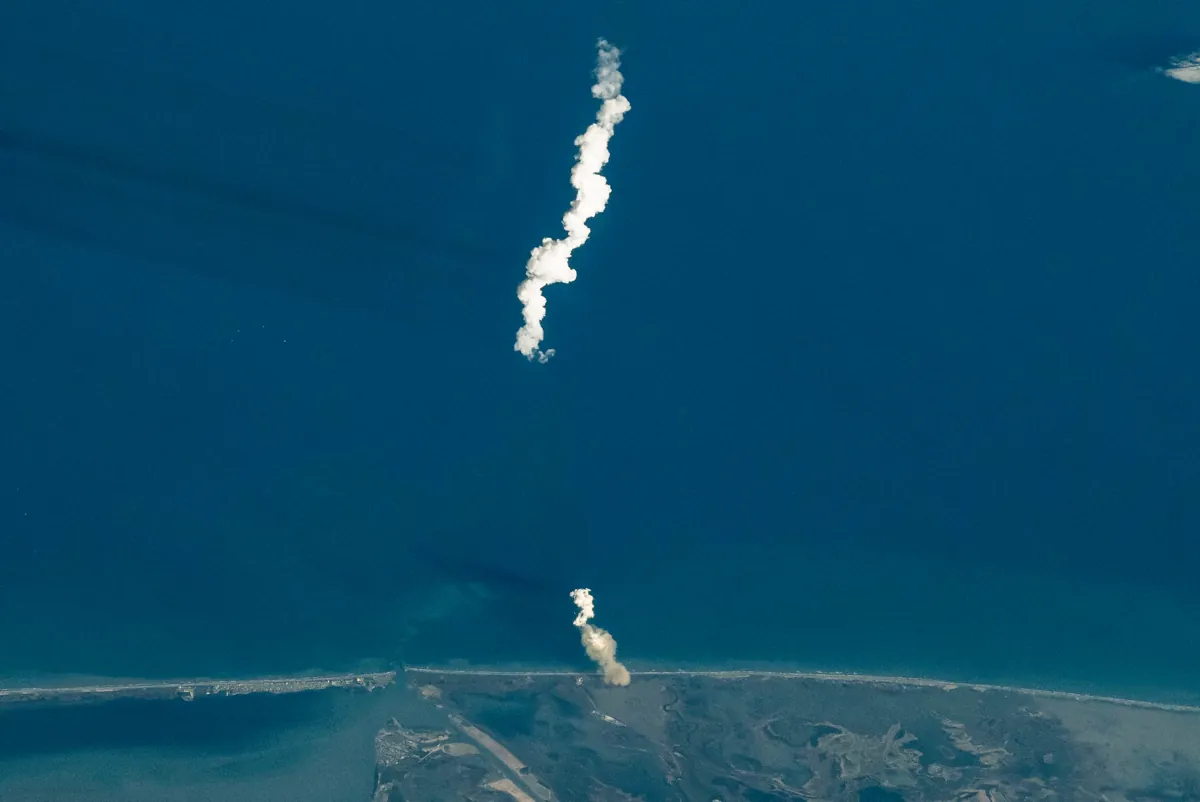
All 26 Starlink V3 satellites deployed
This is the first time SpaceX has flown Starlink V3 satellites meant to stay up and join the constellation. Earlier Starship flights released V3 test payloads, but on suborbital paths they quickly came back down, Space.com notes. Deployment began around 9:24 a.m. EDT, and Space.com reported at 9:54 a.m. EDT that Ship 41 had released all 26 satellites. Huot later said SpaceX had made contact with each of them, CNN reports.
SpaceX claims each V3 satellite adds 1 Tbps of capacity, or 26 Tbps for the batch, about 10 times what one Falcon 9 launch of V2 mini satellites adds. Huot put it on the webcast as "like 20 Falcon 9 flights in terms of bandwidth," per CNN. Those are SpaceX's numbers; nobody has measured V3 service yet. SpaceX says the satellites unfold their antennas and solar arrays, raise their own orbits, and could start serving customers "as soon as a few weeks after launch."
Three of the 26 carry cameras to photograph Starship's heatshield, which SpaceX wants to inspect before it tries bringing ships back to the launch site. As of 2 p.m. EDT, we had not seen those images published.
Why Starship came home early
The plan was about 10 hours and up to six orbits, with a deorbit burn near the 8 hour 53 minute mark and a splashdown west of Chile. Instead, SpaceX took the first of its planned checkpoints. "We are looking like we are going to take our first checkpoint and come back early," Huot said on the webcast, per CNN, with the deorbit burn "right around two hours and 12 minutes into the flight" and a Pacific landing "a little over three hours into the mission."
Space.com reported at 10:29 a.m. EDT that SpaceX made the call after evaluating the ship's status at that checkpoint. Neither outlet reported a specific fault behind it, and as of 2 p.m. EDT we had not seen SpaceX give one. The engine that shut down on ascent is the obvious question, but SpaceX has not tied the two together, so we won't either.
The rest went to the shortened plan. Ship 41 did its deorbit burn on one Raptor 3 engine, Space.com reported at 11:04 a.m. EDT, then reentered the atmosphere. CNN describes a controlled landing burn at a pre-planned Pacific site, with a large fireball on contact with the water and the ship appearing to stay at least partly intact. This Starship splashdown was less soft than Flight 13's in July, CNN notes. Space.com puts splashdown at about 11:58 a.m. EDT in the northern Pacific, 3 hours 9 minutes after liftoff.
Flight 14 timeline: planned and actual
The planned times come from SpaceX's published flight timeline, which it labels approximate. The actual column comes from Space.com's and CNN's live coverage; clock times after liftoff are our arithmetic from the 8:49 a.m. EDT liftoff, so they can be off by a minute or two.
| Event | Planned time after liftoff | What happened | Clock (EDT) |
|---|---|---|---|
| Stage separation (hot staging) | 2 min 22 s | At about 2 min 34 s | 8:51 a.m. |
| Booster landing burn, offshore in the Gulf | 6 min 36 s | Done; 31 of 33 engines relit for boostback | 8:56 a.m. |
| Orbital insertion burn | 25 min 19 s | Done, after the go/no-go call | about 9:14 a.m. |
| Satellite deployment | 34 min 9 s to 1 h 4 min 41 s | All 26 out | 9:23 to 9:54 a.m. |
| Deorbit burn | 8 h 52 min 37 s | Moved up to about 2 h 12 min | about 11:01 a.m. |
| Splashdown in the Pacific | about 9 h 50 min | About 3 h 9 min, northern Pacific | about 11:58 a.m. |
The booster did not get a clean run either. On Flight 13, per SpaceX, ice clogged the booster's center engines late in the boostback and only 8 of 13 planned engines relit for the landing burn, so SpaceX changed engine filtering and relight software for this flight. Even so, Huot confirmed that only 31 of Booster 21's 33 engines relit for the boostback burn, per CNN. Space.com reported that the booster finished its landing burn above its target area in the Gulf, and Huot said it "looked like a pretty soft splashdown," CNN reports.
What happens next
As of 2 p.m. EDT on September 28, 2026, these were still open:
- Why SpaceX ended the flight early. Huot described it as taking the first checkpoint; SpaceX has not published a cause.
- The engine shutdowns. One ship vacuum engine quit on ascent and two booster engines did not relight, after SpaceX changed relight software for this flight.
- Heatshield photos. The three camera-equipped satellites were meant to image Ship 41's tiles from outside; none had been published.
- Starlink V3 service. SpaceX says the satellites raise their own orbits and could serve customers within weeks; nobody has measured their capacity.
- The FAA. Its statements page had nothing on Flight 14 as of 2 p.m. EDT, so no mishap investigation had been announced.
- Flight 15. CNN reports that when Starship flies next, and what that mission looks like, is not yet clear.
NASASpaceFlight's mission preview lays out the full plan this flight was measured against, and SpaceX's X account is where its own post-flight updates tend to appear first. More coverage of rockets, networks and the hardware behind them is on our tech hub.
Bottom line
Starship Flight 14 did the two things it most needed to: it reached orbit for the first time and delivered 26 working Starlink V3 satellites, based on what Space.com, CNN and SpaceX's webcast said. It did not fly the full mission. SpaceX brought Ship 41 home about 7 hours early for reasons it hasn't explained, and the engine problems on both stages are still there. Watch for SpaceX's post-flight summary, the heatshield images and any FAA statement; we'll update this page when they arrive.
FAQ
Did Starship Flight 14 reach orbit?
Yes. Space.com and CNN reported that Ship 41 completed its orbital insertion burn at about 275 km roughly 25 minutes after liftoff, making Flight 14 the first Starship flight to reach orbit. It then deployed all 26 Starlink V3 satellites.
Why did Starship Flight 14 end early?
SpaceX decided at its first orbital checkpoint to bring the ship back, spokesperson Dan Huot said on the webcast, per CNN. As of 2 p.m. EDT on September 28, 2026, SpaceX had not given a specific reason. The planned mission was about 10 hours; this one lasted about 3 hours 9 minutes.
What went wrong on Starship Flight 14?
One of the ship's three vacuum engines shut down early during the first burn, a SpaceX spokesperson said on the webcast. On the booster, only 31 of 33 engines relit for the boostback burn. The ship's splashdown was also rougher than July's, with a large fireball, CNN reports.
Where did Starship Flight 14 splash down?
In the northern Pacific at about 11:58 a.m. EDT on September 28, according to Space.com, at what CNN calls a pre-planned site. The original plan was a splashdown west of Chile after about six orbits.