Xiaomi 18 Pro Max first impressions: what holds up so far
Xiaomi 18 Pro Max first impressions, checked: what early testers found on the privacy screen, 8,500 mAh battery and 200 MP zoom, and what nobody has measured.
Source-based. Written from the documents, reporting and reviews linked in the text. Nothing here was tested hands-on by The Ruling Desk. How we work
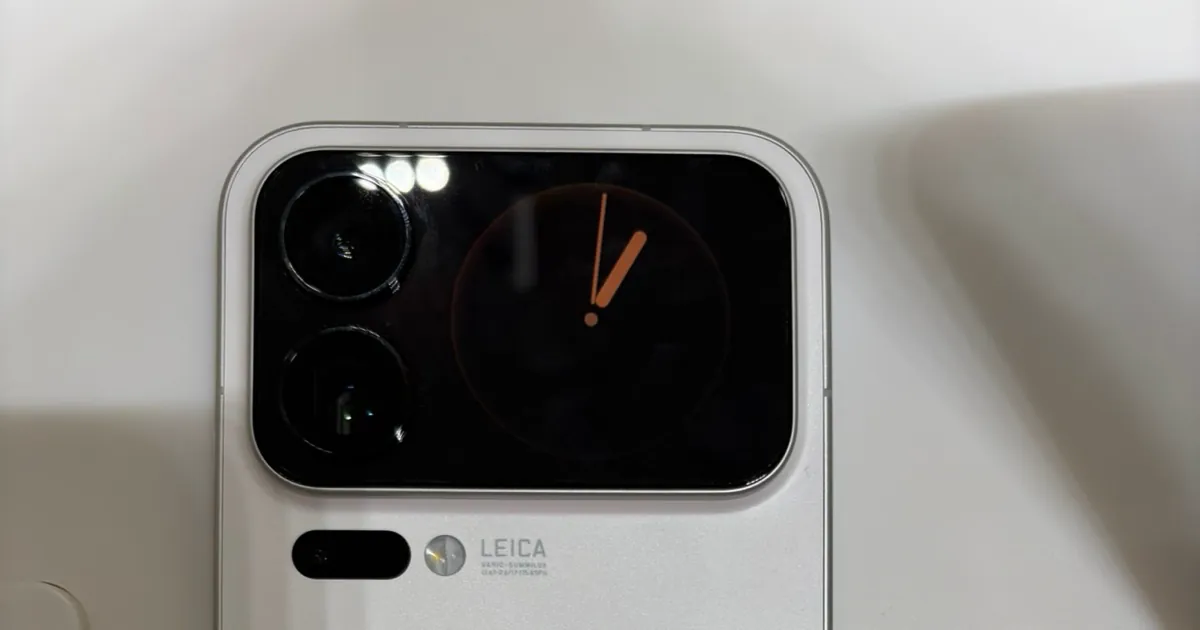
The Xiaomi 18 Pro Max is off to a strong start in early hands-on coverage: a privacy screen, an 8,500 mAh battery, 100 W charging and two 200 MP cameras, in a body that openly borrows the iPhone's look. But every account so far comes from a few days, or a few minutes, with a Chinese-market phone. Here's which first impressions have support from more than one source, and which still rest on one person's word.
Key takeaways
- The privacy display dims the screen for people beside you, not above or below. Two early testers found it effective and a third could still make out the content from the side, so it reduces snooping rather than stopping it.
- Xiaomi rates the battery at 8,500 mAh with 100 W wired charging. The only charging test so far is one five-minute run in a video (12% to 25%), and nobody has published battery life.
- The two 200 MP cameras, including a 3.2x telephoto, are confirmed by several reports. Praise for the zoom is one reviewer's impression, and at least one outlet couldn't test the cameras at all.
- Performance figures are either Qualcomm's claims or a single benchmark screenshot. Sustained speed and heat are untested.
- Xiaomi told reporters the 18 Pro Max is coming to Europe. As of September 24, 2026, there's no date or price outside China, and nothing for the US or Mexico.
Xiaomi 18 Pro Max specs and price
Xiaomi launched the 18 Pro Max in China on September 23. The core specs below are the ones that several reports agree on; they are Xiaomi's figures, not measurements.
| Xiaomi 18 Pro Max | |
|---|---|
| Main screen | 6.9-inch, 120 Hz, privacy display, up to 4,000 nits (Xiaomi's rating) |
| Rear screen | 2.9-inch, 120 Hz, beside the cameras |
| Chip | Snapdragon 8 Elite Extreme Gen 6 |
| Memory and storage | 12 or 16 GB LPDDR5X, 256 GB to 1 TB UFS 4.1 |
| Battery | 8,500 mAh |
| Charging | 100 W wired; wireless figures differ between reports (see below) |
| Rear cameras | 200 MP main, 200 MP 3.2x telephoto, 50 MP ultrawide |
| Price in China | 6,999 to 9,999 yuan, depending on memory |
The display, chip, memory and camera figures come from 9to5Google's launch report. The Xiaomi 18 Pro Max price in China depends on memory, and Gizchina lists each configuration: 6,999 yuan (about US$982) for 12 GB and 256 GB, up to 9,999 yuan (about US$1,403) for 16 GB and 1 TB. Those are China prices with Gizchina's dollar conversions, not what the phone will cost anywhere else.
Most of what follows comes from Marques Brownlee's video, "Xiaomi 18 Pro Max: They've Done It Again!", published September 24. Its description discloses that Xiaomi provided the phone, and Brownlee calls it an early hands-on, not a full review. We checked his claims against four written hands-ons and the makers' own documents.
Does the privacy display actually work?
It's the feature that sets the phone apart, and it's the one where early testers disagree most. You can turn it on for the whole screen or only for certain apps and contexts, and Brownlee describes a gaze-detection feature that warns you when someone else seems to be looking at your screen and offers to switch privacy on.
How well it hides the screen depends on who you ask:
- Brownlee found it keeps text sharper than Samsung's version, but also saw worse viewing angles and a rainbow effect off-axis. He credits Xiaomi's full-RGB subpixel layout, which Xiaomi markets as HyperRGB.
- Gabriele Fischl at connect writes that the screen darkens drastically when tilted sideways. Fischl disclosed attending on Qualcomm's invitation, and connect's lab tests are still to come.
- John Law at Lowyat.NET was less impressed: even from the side, he could still make out what was on the display.
The three weren't using the same angle, brightness, lighting or privacy mode, so the results can't settle which is right. What they agree on is the direction: it restricts viewing from the left and right. Brownlee and Keitai Watch's hands-on both note that someone looking from above or below still sees the screen normally.
Brownlee's comparison is with the Galaxy S26 Ultra, and Samsung's own documentation is candid about the trade-offs of its version. Samsung's privacy display guide says its stronger mode "may slightly blur the screen or alter colors" and that the screen can look darker in bright light. That confirms these screens involve compromises; it doesn't prove Xiaomi's version is better. Nobody has tested how reliably the gaze detection works either.
Xiaomi 18 Pro Max battery and charging
On paper, this is the phone's other big draw. Brownlee reports that the battery grows from 7,500 to 8,500 mAh, which he credits to higher silicon content, and says the phone keeps a SIM tray without weighing more than the iPhone it's compared with. He says a 100 W charger comes in the box, and there's reverse wireless charging for topping up other devices.
Wireless charging is where reports disagree. Gizchina, Frandroid and Keitai Watch list 50 W, and Brownlee says 50 W with the right accessory. 9to5Google's spec list says 27 W. Frandroid adds that these figures are for the Chinese model, and that Xiaomi has cut battery capacity for Europe before.
The only charging test so far
In Brownlee's charging demo, the phone goes from 12% to 25% in five minutes, and he says it drew about 80 W the whole time. The power meter shown on screen reads roughly 55 W at 4:36 and 70 W at 4:41. Two frames can't show a full charging curve (the charger may still have been ramping up), but they also don't confirm a steady 80 W.
For scale, Apple's iPhone 18 Pro spec page promises up to 50% in around 15 minutes with a 60 W-capable adapter, and MagSafe wireless charging up to 25 W. That's Apple's figure for the smaller Pro, not a measurement of either phone.
What nobody has published: how many hours the battery lasts, how long a full charge takes, and how efficient reverse charging is. Brownlee's suggestion that the Xiaomi could fully charge an iPhone and still get through the day is an illustration, not a test.
Performance: one benchmark and the chipmaker's claims
The 18 Pro Max is the first phone with Qualcomm's Snapdragon 8 Elite Extreme Gen 6, the top version of its new chip. Qualcomm's product brief lists two prime cores at up to 5 GHz, and the company claims 13% faster CPU and 44% faster graphics than last year's chip. Our Snapdragon 8 Elite Gen 6 vs Extreme breakdown covers what those claims do and don't mean.
Brownlee reports the phone felt smooth and describes a 15% to 20% benchmark gain over the previous generation. A frame at 2:38 of his video shows a Geekbench 7 CPU result of 3,508 single-core and 10,797 multi-core. That's one run on screen, without the older phone's matching result, repeat runs or temperatures.
Qualcomm's percentages and Brownlee's estimate measure different things, so they shouldn't be averaged or read as contradicting each other. Neither tells you how the phone holds up in a long gaming session, where heat usually decides the result.
Cameras: the 200 MP zoom gets the most praise
The camera hardware is well corroborated: a 200 MP main camera, a 200 MP telephoto with a 3.2x optical view, and a 50 MP ultrawide, all branded Leica. Lowyat.NET lists the same setup and adds sensor sizes: 1/1.28 inch for the main camera and 1/1.56 inch for the telephoto.
The strongest praise goes to the zoom. Brownlee says the bigger telephoto sensor makes him want to take more zoomed-in photos, and that its resolution leaves room to crop. He likes the main camera and calls the ultrawide the neglected one. Lowyat's Law found the main sensor kept a lot of detail, but only tried it briefly in good light, and Frandroid's Adrian Branco says his team couldn't use the cameras at all.
The rear screen doubles as a viewfinder, so you can take selfies with the main cameras instead of the front one. Brownlee is enthusiastic about the results, but nobody has published full-resolution samples or side-by-side comparisons yet. Treat "better selfies" as a reasonable expectation from bigger sensors, not a finding.
Rear screen, side button and software
The rear screen is back from last year's model, and Brownlee describes camera glass that now sits flush with the surface around it. He says that makes the screen easier to swipe but may collect more smudges. It shows the viewfinder, a calendar, a step counter and animated companions, and the speakers sit behind it.
His clearest complaint is the new side button. A single press can only open Xiaomi's AI memory feature or do nothing. Long-press options are broader (voice recording, silent mode, Do Not Disturb, privacy mode), but you can't set it to open any app you like. Keitai Watch describes the same AI-first behavior.
Software is also the biggest limit of this particular phone. Brownlee installed Google Play but says he can't use a Chinese-market model as his daily phone, and he didn't really evaluate Xiaomi's assistant. His view that the iPhone-like controls and styling are meant to win over iPhone users is his reading, not something Xiaomi has said.
Xiaomi 18 Pro Max vs iPhone 18 Pro Max
The comparison is the frame of Brownlee's video, and Apple's iPhone 18 Pro announcement confirms the iPhone side of it: a smaller Dynamic Island, the 2 nm A20 Pro chip, and a 48 MP main camera with a variable aperture. The iPhone 18 Pro Max starts at $1,299 in the US and is on sale now; our iPhone Duo and iPhone 18 Pro guide has the rest of Apple's lineup.
On the spec sheet, the Xiaomi has the bigger battery, faster wired charging, a privacy screen, a rear screen and higher-resolution cameras. What no source has shown yet is that it takes better photos, lasts longer or runs faster in daily use. And for most readers, the iPhone has one decisive advantage: you can buy it at home, with local support.
When it comes outside China
Last year, Xiaomi kept its Pro models to China and parts of Asia. This time it says they're going global. Connect reports that Xiaomi confirmed a global launch during its briefing, and Frandroid quotes a Xiaomi spokesperson telling Europeans in the room that the 18 Pro and 18 Pro Max "will indeed be launched on your continent" (our translation from French).
That's a promise, not a release. As of September 24, 2026, Xiaomi hadn't announced a date, a price outside China, or whether the global model keeps the same battery and charging. No source we found mentions the US or Mexico. For other phone launches, see our gadgets coverage.
What it means for you
If you're outside China, there's nothing to buy yet, and importing a Chinese-market unit means the software trade-offs Brownlee describes. If you're waiting for the global version, watch for three things in full reviews: measured battery life, how the privacy screen looks from the side in daylight, and whether the international model keeps the 8,500 mAh battery.
Bottom line
The Xiaomi 18 Pro Max's first impressions are good and fairly consistent on hardware: a genuinely useful privacy screen, a big battery, fast charging and a standout telephoto. They are still impressions. The privacy screen didn't convince every tester, the charging and benchmark numbers come from single runs in one video, and no one has measured battery life or compared photos side by side. Wait for full reviews of the global model before deciding it beats the iPhone.
FAQ
Is the Xiaomi 18 Pro Max coming to the US or Mexico?
Xiaomi has confirmed a global launch and told European reporters it will reach Europe. As of September 24, 2026, it hadn't named dates, prices or specific countries, and no source we found mentions the US or Mexico.
How big is the Xiaomi 18 Pro Max battery?
Xiaomi rates it at 8,500 mAh, up from 7,500 mAh on last year's model, with 100 W wired charging. Those are figures for the Chinese version, and nobody has published a battery life test yet.
How does the Xiaomi 18 Pro Max privacy display work?
It narrows the viewing angle so people to your left and right see a darkened screen, while people above or below still see it normally. You can apply it to the whole screen or to specific apps and contexts. Early testers disagree on how well it hides content from the side.
How much does the Xiaomi 18 Pro Max cost?
In China it costs 6,999 yuan (about US$982) for 12 GB of memory and 256 GB of storage, up to 9,999 yuan (about US$1,403) for 16 GB and 1 TB. Xiaomi hasn't announced prices for other markets.