iPhone Duo vs Xiaomi 18 Fold: specs and buying trade-offs
iPhone Duo vs Xiaomi 18 Fold: the official specs side by side, what two hands-on videos and a spec scorecard show, and the trade-offs of importing Xiaomi's.
Source-based. Written from the documents, reporting and reviews linked in the text. Nothing here was tested hands-on by The Ruling Desk. How we work
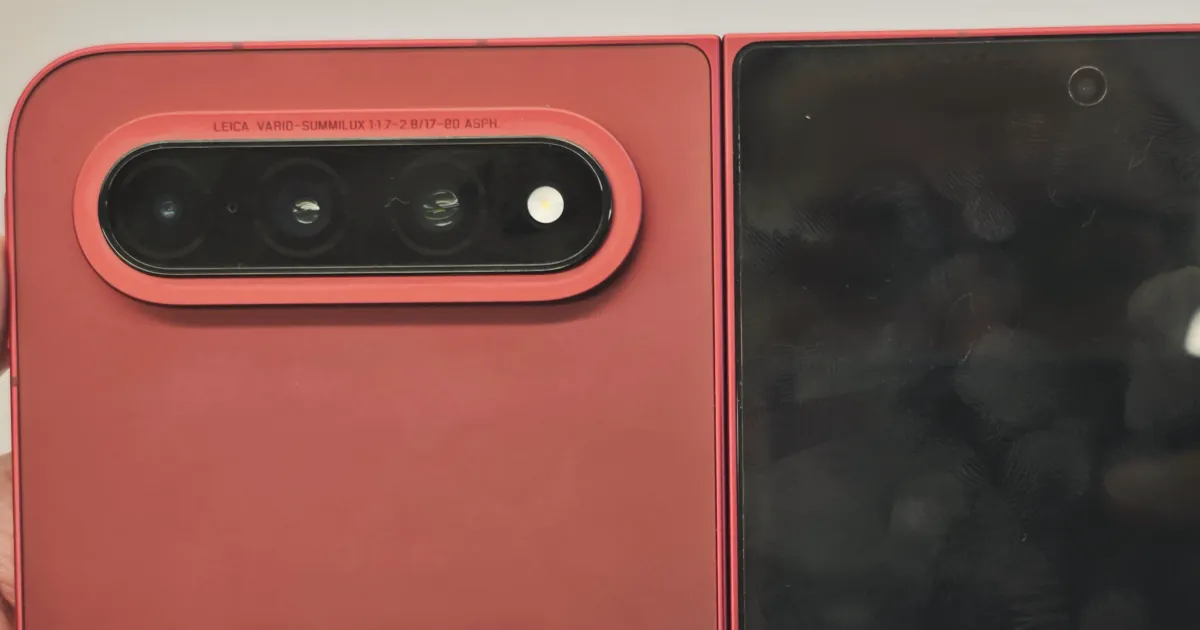
In the iPhone Duo vs Xiaomi 18 Fold matchup, Xiaomi wins the spec sheet: it's 35 grams lighter, has a real telephoto camera and a lower price in China, and it publishes a 6,000 mAh battery capacity that Apple gives no number to compare against. But the three videos we analyzed don't show it's the better phone overall. The reviewer who spent the most time with it found awkward app layouts, a stress test that shut down from heat on his unit and a less refined finish, and he preferred the Duo.
Key takeaways
- On the makers' spec sheets, the Xiaomi 18 Fold weighs 219 g against the iPhone Duo's 254 g, and lists a 6,000 mAh battery (Apple publishes no capacity for the Duo), 67 W wired charging and a 3.5x optical telephoto the Duo lacks.
- It starts at 10,999 yuan (about $1,640 at launch conversion) in China, against $1,999 for the Duo in the US. Xiaomi has no plans to sell it elsewhere, so buyers abroad have to import it.
- Mrwhosetheboss, who has used both, found poorly adapted apps on the Xiaomi, and his unit force-closed a stress test from heat after about ten minutes. He showed no matching test on the Duo, so this is one unit, not a verdict on sustained performance.
- A Spanish-language unboxing shows a China unit running in Spanish with Google apps, but the reseller installed the Play Store, and banking, payments and warranty are still unchecked.
- Neither battery figure is a measured result: Xiaomi publishes capacity, Apple publishes playback hours from its own tests. Real battery life for either phone is unmeasured here.
This comparison is built from Apple's published specs, Xiaomi's figures as reported at its September 7 launch, and three YouTube videos. Two are hands-on: a review by Mrwhosetheboss, published September 22, who says he has used both phones, and an unboxing of a China unit by El Rincón de China, published September 21, who hasn't tried the Duo. The third, by TheAgusCTS, is an animated spec scorecard with no hands-on use. We didn't test either phone.
iPhone Duo vs Xiaomi 18 Fold: the specs side by side
The two phones share a shape: short and wide when closed, and close to a small tablet when open. Here are the makers' own numbers, since the videos disagree on a few of them.
| iPhone Duo | Xiaomi 18 Fold | |
|---|---|---|
| Starting price | $1,999 in the US (256 GB) | 10,999 yuan in China, about $1,640 (12 GB + 256 GB) |
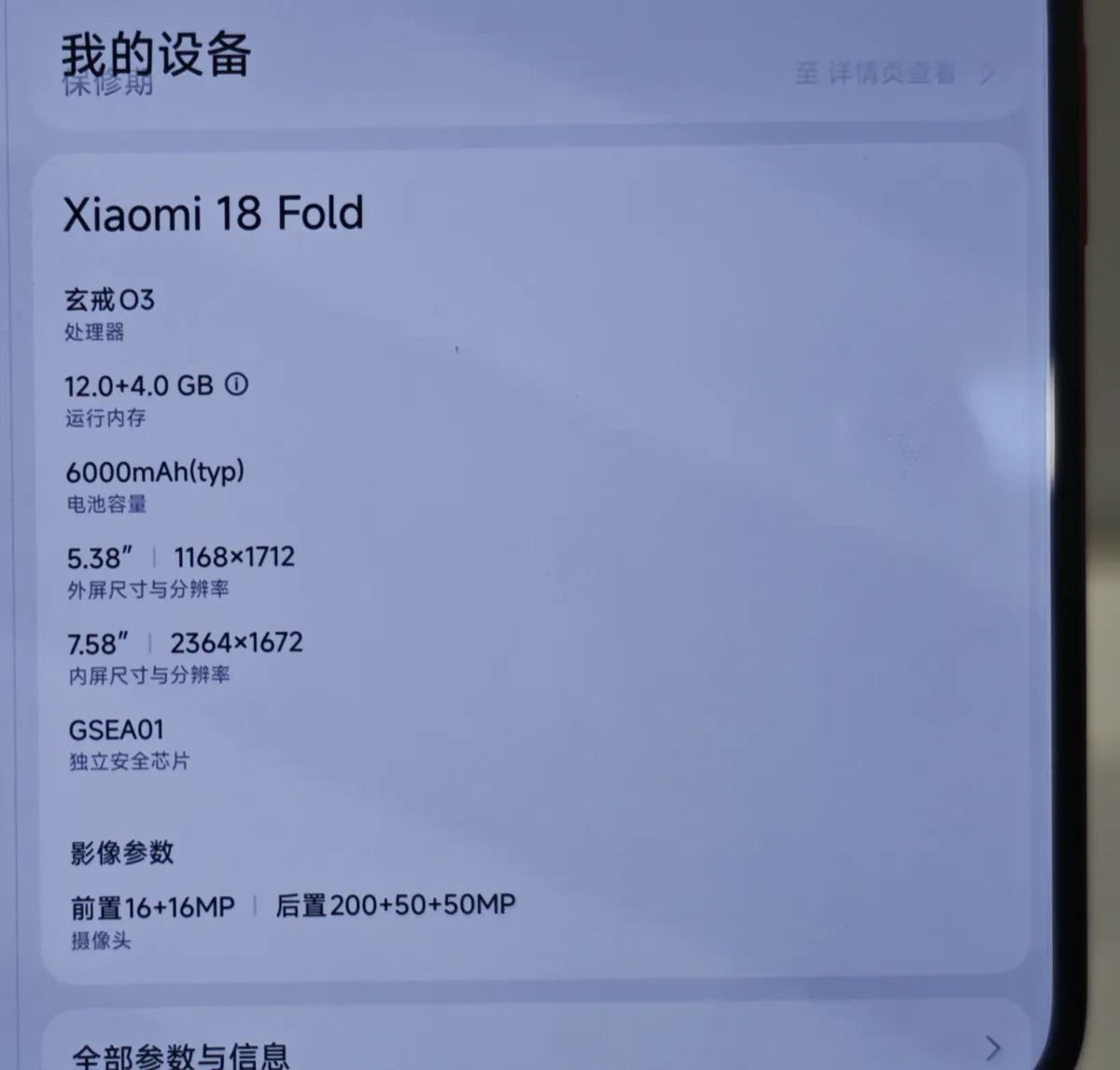
| Weight | 254 g | 219 g |
| Thickness, closed / open | 11.3 mm / 5.2 mm | 10.68 mm / 5.02 mm |
| Inner screen | 7.6 inches, 1878 x 2670, nano-texture finish | 7.58 inches, 2364 x 1672 |
| Outer screen | 5.4 inches | 5.38 inches |
| Brightness (maker's claim) | 3,000 nits peak outdoor; 1,600 nits peak HDR; 1,000 nits typical | 4,000 nits peak |
| Chip | A20 Pro (2 nm) | XRING O3 (3 nm) |
| Rear cameras | 48 MP main, 48 MP ultrawide; 2x is a crop of the main sensor | 200 MP main (1/1.56-inch sensor), 50 MP 3.5x periscope telephoto, 50 MP ultrawide |
| Battery (maker's claim) | No capacity published; up to 31 hours of video playback on the inner screen, 44 on the outer, in Apple's tests | 6,000 mAh capacity |
| Charging | About 50% in 20 minutes with a 60W-capable adapter, sold separately; MagSafe up to 25 W | 67 W wired, 50 W wireless |
| Frame and rating | Titanium, IP68 | Aluminum, IP58/IP59 |
| Software | iOS 27 (ships with iOS 27.1) | HyperOS 4 on Android 17 |
Apple's figures come from its iPhone Duo tech specs and its launch announcement, which says the phone "will be available with iOS 27.1" and credits the chip to a 2-nanometer process. Xiaomi's come from its September 7 launch in China, as reported by GSMArena and IT Home, plus GSMArena's spec page for the chip's 3 nm process and the IP58/IP59 rating. All were checked on September 23, 2026.
Two conflicts in the videos are settled here. The telephoto is 3.5x, not 3x. And the Duo's "25 W vs 60 W" confusion is two different things: 25 W is MagSafe, and 60 W is the adapter class Apple recommends for fast wired charging. Apple's own footnote says it ran that test with its 40W Dynamic Power Adapter with 60W Max.
For everything else about Apple's phone, including storage tiers and release dates, see our iPhone Duo price and specs guide.
Where the Xiaomi 18 Fold wins on paper
The case for Xiaomi is real, and the videos make it:
- It's lighter. 219 g against 254 g is a difference you feel in a pocket. El Rincón de China weighed his unit at about 220 g, and about 250 g in the case that comes in the box.
- A published battery capacity, and higher rated wireless charging. Xiaomi specifies 6,000 mAh, which is a capacity, not a runtime. Apple doesn't publish the Duo's capacity, so there is no capacity comparison to make; it quotes hours of video from its own tests on preproduction units instead, and the two numbers can't crown a winner. Mrwhosetheboss called the Xiaomi the longest-lasting foldable he has used, but gave no measured figures. Xiaomi rates wireless charging at 50 W against MagSafe's 25 W on the Duo; wired, it rates 67 W, while Apple gives a charging time rather than a wattage, so those two aren't directly comparable.
- A real zoom lens. The 50 MP periscope telephoto gives 3.5x optical zoom. The Duo has no telephoto; Apple's 2x option is a crop of the main sensor.
- A higher brightness rating. Xiaomi rates both panels at 4,000 nits peak, against Apple's 3,000 nits peak outdoor. These are each maker's claims under its own test conditions, not a side-by-side measurement, and none of the videos measured the screens.
- Extras Apple skips. Two physical SIM slots (the Duo is eSIM only), an infrared remote control, a charger and case in the box, and a pre-installed screen protector on the outer screen.
- It costs less in China. The Xiaomi 18 Fold price is about $360 below the Duo's US price at launch, before import costs.
Xiaomi's face unlock is a convenience, not a secure method. Mrwhosetheboss says you won't use it for banking. That matters less than it sounds here: the Duo has no Face ID either and uses Touch ID in the side button, and the Xiaomi also has a side fingerprint reader.
Software: the gap the spec sheet hides
The biggest difference isn't in any table. In his review, Mrwhosetheboss argues that Apple designed iOS around this unusual shape, moving the dock, status icons and search to fit it. Xiaomi, he says, often stretches a normal phone or tablet layout into the new screen and leaves empty margins.
He did like several things. Multitasking is flexible: he opened six apps as a group plus two floating windows, and his unit stayed responsive. App icons rotate smoothly when you turn the phone, and Settings switches cleanly from a phone view to a tablet view.
His list of problems on the Xiaomi was longer:
- Uneven black bars in Xiaomi's own Camera app.
- Stretched, low-resolution numbers in the Weather app.
- An awkward YouTube split view, and Netflix controls that broke on rotation.
- A game menu hidden under the camera cutout.
- Lag and jumping text in the Play Store, and pre-installed Chinese apps that ignore the wide screen.
These are the examples he found on one unit, not proof that every app misbehaves. He also says he doesn't know yet how third-party apps behave on the Duo, and will test that when he gets his own; what he saw on the Duo was its pre-installed apps. So the app comparison isn't finished.
Heat, cameras and finish
The next question is whether the numbers hold up under load. On Mrwhosetheboss's unit, normal use and 30-minute gaming sessions were fine. But a 3DMark stress test force-closed from overheating about ten minutes in, twice, and his thermal camera showed the chip's side of the phone much hotter than the other. That's one unit on launch software, and he didn't show the same test on the Duo, so treat it as a warning to watch, not a comparison. Apple says the Duo uses a custom vapor chamber for cooling, which is a design claim, not a test result.
On cameras, he argues the 200 MP label oversells the main camera. GSMArena lists a 1/1.56-inch sensor, which he says is the same size as a base iPhone 17's main camera, and he says its output looks worse than the Duo's; his blind side-by-side is a single shot in good light. He found the ultrawide's video grainy even in decent light.
He also listed smaller complaints about his Xiaomi: an aluminum frame he expects to scratch more than titanium, no stylus support (Apple says Pencil support comes to the Duo later this year), a hinge that sometimes clicks, no nano-texture finish like the Duo's, fingerprints, a crease about as deep as the Duo's but less hidden, and speakers harsh enough that he turned them down. His answer to whether Xiaomi built the better phone was no.
Buying a China-only foldable: the Spanish-language unboxing
El Rincón de China got a red 12 GB and 512 GB unit from a reseller and filmed a first look. He said he thinks the base model sells for about €1,850 there, and that he paid less with a discount coupon the reseller gave him for the video. His take is much more positive, and it answers a practical question: can you live with a China model?
On his unit, the system menu offered Spanish (Spain), which surprised him, since earlier China-only Xiaomi phones mostly came in Chinese and English. The reseller had already installed the Play Store before shipping it; he then removed the pre-installed Chinese apps and added Google apps from it. The box held a case, a 67 W charger with a US-style plug, an adapter and a SIM tool.
He liked the wide outer screen for video, since less of the picture gets cropped, and thought the two speakers sounded good. He could feel the crease and found it a little more noticeable than on a Galaxy Z Fold 8. One letdown: the front camera seems limited to 1080p at 60 fps, while the rear cameras go up to 8K.
He expects NFC payments with Google Wallet to work but says he'll check that, battery life and app compatibility in a full review. That's the right caution, because a working Play Store doesn't prove that banking apps, tap-to-pay, carrier features or warranty service work where you live. Xiaomi has no plans to sell the phone outside China, according to GSMArena, so importing means a reseller and its markup.
Why spec scorecards mislead
TheAgusCTS runs through animated spec slides and scores Xiaomi ahead: Xiaomi wins processor, battery and charging, Apple wins display, and the other four categories are ties. It's a handy summary, and its own closing slide says the result is based only on numbers and doesn't decide which phone is better.
Two of its categories show why. The battery slide sets Xiaomi's 6,000 mAh capacity against "up to 32 hours" for Apple, a figure that doesn't match Apple's published 31 or 44 hours of video, and in any case capacity and runtime aren't the same measure. The camera slides list megapixels, apertures and video modes, which say little about photo quality, as Mrwhosetheboss's side-by-side suggests. Its prices also differ from the others: it lists $1,549 for Xiaomi, while the launch price converts to about $1,640.
Where the three videos disagree
| Topic | What they say | How to read it |
|---|---|---|
| Overall | Mrwhosetheboss prefers the Duo; El Rincón de China is enthusiastic about the Xiaomi; TheAgusCTS scores Xiaomi ahead | Extended critical use, a first look and a spec tally aren't the same kind of evidence |
| Speakers | Harsh on Mrwhosetheboss's unit, good on El Rincón de China's | Subjective listening, in different demos |
| Crease | Less hidden than the Duo's; more noticeable than a Galaxy Z Fold 8's | Different comparison phones and lighting |
| Thickness | 10.7 mm closed in two; about 11.1 mm measured in the unboxing | Xiaomi's figure is 10.68 mm |
None of them ran a controlled battery test, a stress test on both phones, a long-term hinge test, or a camera test in low light and motion.
What it means for you
Which phone fits depends on what you can't give up. This table matches common priorities to the phone that fits them, with the evidence gap next to each one.
| If your priority is… | Leans toward | The caveat |
|---|---|---|
| Staying in Apple's ecosystem (iMessage, Apple Watch, a Mac) | iPhone Duo | An Apple Watch needs an iPhone, so this one is structural, not a judgment call |
| Android and Google services | Xiaomi 18 Fold | On a China unit, the Play Store came from the reseller; banking and payment apps weren't tested in these videos |
| Buying locally, no import | iPhone Duo | Apple says it goes on sale October 23 in more than 70 countries; Xiaomi's is China-only |
| Warranty and repairs | iPhone Duo | An imported Xiaomi depends on the reseller; we couldn't verify whether Xiaomi service outside China will repair a China unit |
| Zoom photos | Xiaomi 18 Fold | It has a 3.5x optical telephoto and the Duo has none, but no one here tested zoom quality |
| Main camera quality | Unclear | One blind shot favored the iPhone; there's no low-light or video comparison yet |
| Weight and price | Xiaomi 18 Fold | Lighter on both spec sheets; import markups narrow the price gap, so compare the landed price |
| Sustained performance | Unclear | One Xiaomi unit overheated in a stress test; the Duo wasn't tested the same way |
Pick the Xiaomi 18 Fold if you want a lighter compact foldable with a telephoto lens and two physical SIMs, and you're comfortable importing a phone with no local warranty. You'll get a lot of hardware for the money, though its real battery life is still unmeasured.
Pick the iPhone Duo if you care most about apps that fit the screen, the nano-texture screen finish, IP68 protection and local support. If you already use an iPhone, the software gap one reviewer found is the strongest reason in these videos to stay. How well its hinge holds up is covered in our iPhone Duo durability article.
More phones and hardware are in Gadgets, and every foldable we cover is under Foldable phones.
Bottom line
The Xiaomi 18 Fold is lighter, cheaper in China and better equipped on paper than the iPhone Duo. In the iPhone Duo vs Xiaomi 18 Fold review that went deepest, the reviewer who used both still chose the Duo, for software polish and finish, and his Xiaomi overheated in a stress test he didn't run on the Duo. If you're outside China, the import hurdles tilt it further toward Apple. Wait for full reviews with battery, camera and stress tests on both phones before you import one.
Updated September 23, 2026: the recommendation on sustained performance is now qualified, since only the Xiaomi was stress-tested; no battery winner is declared from maker figures; and two details about the videos are fixed, as listed on the Corrections page.
FAQ
Is the Xiaomi 18 Fold available outside China?
No. It went on sale in China on September 10, according to IT Home, and Xiaomi has no plans to sell it elsewhere, according to GSMArena. Buyers abroad have to import it through resellers, usually at a markup and without a local warranty.
How much does the Xiaomi 18 Fold cost?
It starts at 10,999 yuan (about $1,640) for 12 GB of RAM and 256 GB, and goes up to 14,999 yuan for 16 GB and 1 TB. A ceramic edition costs 15,999 yuan. The iPhone Duo starts at $1,999 in the US. For the Duo's other storage tiers, see our price and specs guide.
Is the Xiaomi 18 Fold lighter than the iPhone Duo?
Yes. It weighs 219 g against the Duo's 254 g, and it's slightly thinner: 10.68 mm closed against 11.3 mm, by each maker's figures.
Which has better battery life, the iPhone Duo or the Xiaomi 18 Fold?
Nobody knows yet. The Xiaomi has a 6,000 mAh battery, and Apple quotes up to 31 hours of video on the Duo's inner screen from its own tests, but those measure different things. One reviewer found the Xiaomi long-lasting without publishing numbers, and no side-by-side battery test exists in these videos.
Which has the better camera, the iPhone Duo or the Xiaomi 18 Fold?
On paper, the Xiaomi: it adds a 3.5x periscope telephoto and a 200 MP main camera. In the one blind side-by-side in these videos, Mrwhosetheboss preferred the iPhone's photo and found Xiaomi's ultrawide video grainy. A proper low-light and zoom test hasn't been done yet.