Project Suncatcher satellite: what Google's TPU test proves
Google's first Project Suncatcher satellite reached orbit with four TPUs. What it measures, why Google wants AI compute in space, and what it can't prove yet.
Source-based. Written from the documents, reporting and reviews linked in the text. Nothing here was tested hands-on by The Ruling Desk. How we work
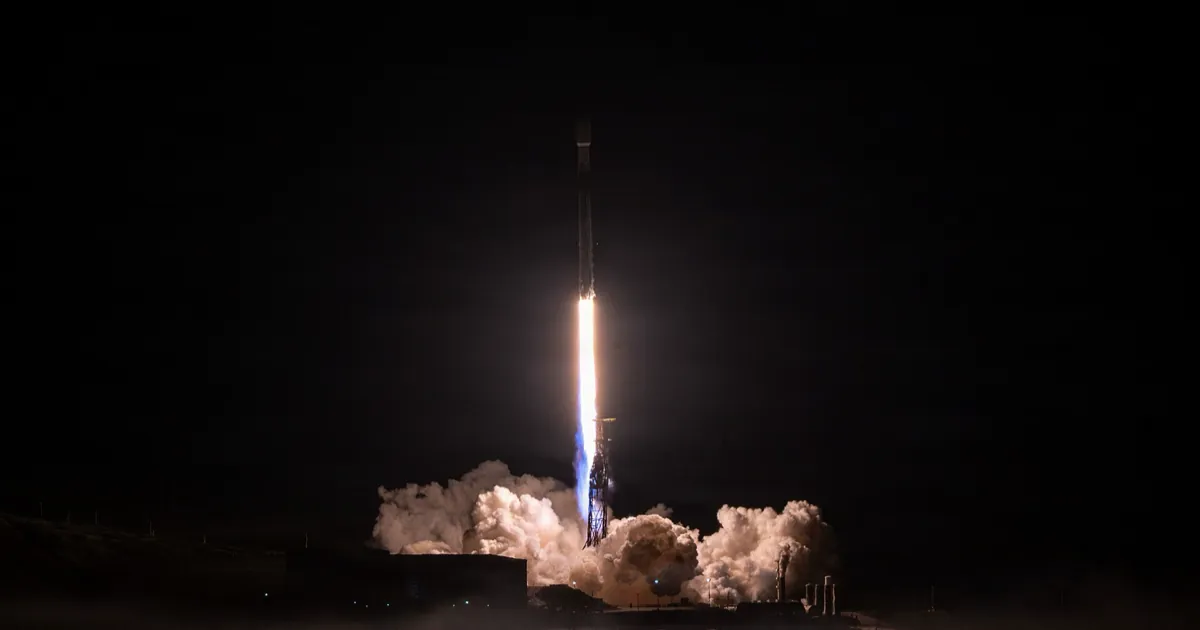
Google's first Project Suncatcher satellite is in orbit and working. It rode SpaceX's Transporter-18 rideshare from Vandenberg Space Force Base, California, on Thursday, October 1, 2026, and the same day Google said its team had confirmed contact and the satellite was "operating as expected." The prototype, built with the satellite company Planet, carries four of Google's TPUs, its in-house AI chips, to find out whether they survive the radiation and heat of space.
Key takeaways
- The Project Suncatcher satellite launched on October 1 with 129 other payloads, and Google says it is in contact and working normally. It is a test bed, not a data center.
- It carries four TPUs, according to NPR, and will run a version of Google's open Gemma model for 15 minutes at a time because of heat limits.
- Google's pitch is solar power: in the right orbit, it says, panels produce up to eight times more energy than on Earth.
- The hard parts are still ahead: laser links between satellites (Google's next test, in 2027), cooling, repairs and launch costs. Google's project lead told NPR he doesn't expect space compute to be cheaper within five years.
What the Project Suncatcher satellite carries and measures
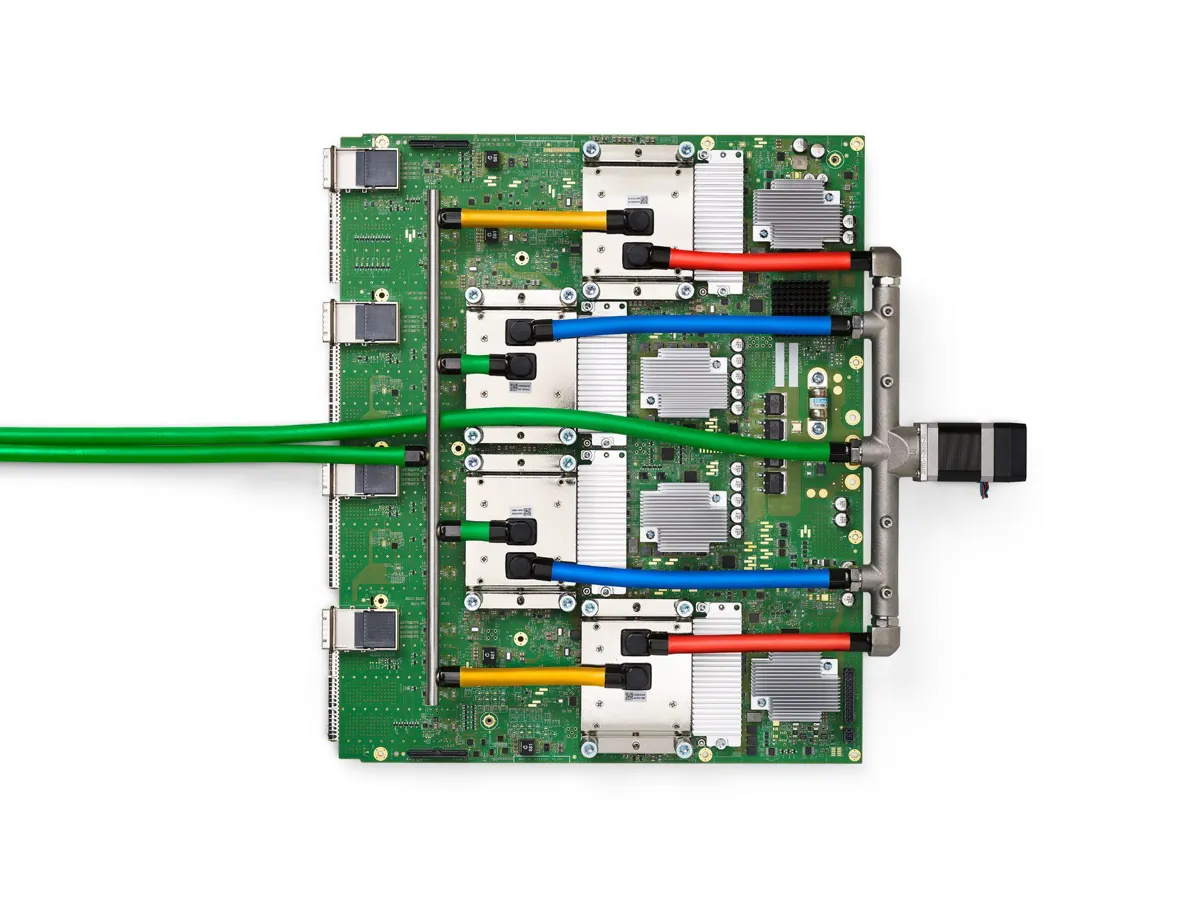
The satellite is about the size of a refrigerator and holds four Tensor Processing Units, the chips Google designs for machine learning and already runs in its data centers, NPR reported. Planet will commission the spacecraft, then Google will switch on the TPUs and run Gemma in 15-minute sessions to answer simple queries. Google wants the mission to keep working for a year, and its lead, Travis Beals, called it "a very minimal test."
In its launch-day post, Google says that over the coming weeks it will collect data on three things: the physical stress of the launch, radiation, and the thermal extremes of orbit. Its pre-launch explainer fills in what the team already knows from the ground:
- Launch loads. A ride to low Earth orbit can hit 10 g, and individual chips can see 50 to 100 g. The satellite went through shake tests on all three axes and held up.
- Radiation. Google ran its Trillium chips, the Google TPU generation it tested, through a proton beam at UC Davis's Crocker Nuclear Laboratory while they worked on AI tasks, watching for errors such as bit flips. It says they survived a total dose higher than a five-year mission would deliver.
- Heat. There's no air to carry heat away in a vacuum, so Google cools the chips with a mix of heat pipes and radiators. That system has been tested only in a thermal vacuum chamber; this flight is its first trial in space.
The satellite sits in a sun-synchronous orbit where its panels are almost never in shade, NPR reports, so it doesn't need heavy batteries for backup power.
Why Google wants AI compute in orbit
The case for AI data centers in space is energy. Facilities on Earth need enormous amounts of power and face growing local opposition, and the demand is already straining parts like memory chips. In orbit, Google says, a solar panel can be up to eight times more productive than on the ground. "The sun puts out almost all of the power in our solar system," Beals told NPR.
Google's 2025 research post sketched what a full system could look like: an illustrative cluster of 81 satellites flying about 650 km up, packed within a 1 km radius so they can talk over short laser links. A bench demo of those links reached 800 Gbps each way. Google's analysis assumed launch prices could fall below $200 per kilogram by the mid-2030s, at which point running costs might be roughly comparable to the energy bill of an equivalent data center on Earth. That is a projection, not a price anyone pays today.
Google isn't alone. NPR notes that the startup Starcloud flew an Nvidia H100 chip last November, and CNBC reports that SpaceX COO Gwynne Shotwell said in September the company will deploy "supercompute in space" in 2027. CNBC also notes that Alphabet's stake in SpaceX, which went public in June, is worth more than $82 billion, so the two are partners and rivals at once.
What this satellite will and won't prove
If it works, the mission answers the first question: can Google's AI chips run in orbit, through real radiation and real temperature swings, with a cooling system that fits on a satellite. That's useful data no ground test can fully copy, as Google itself puts it.
It won't answer the questions that decide whether space data centers make sense:
| Question | Covered by this satellite? |
|---|---|
| Do TPUs survive launch, radiation and heat in orbit? | Yes, that's its job |
| Can satellites share data over high-speed lasers? | No, Google plans a two-satellite test in 2027 |
| Can a satellite cool dozens of TPUs, not four? | No, future designs would carry dozens of chips |
| Can broken hardware be fixed or replaced? | No |
| Is it cheaper than a data center on Earth? | No, it depends on launch prices years away |
Cooling is the clearest constraint. Beals told NPR the radiators are among the heaviest parts of the current satellite, and weight is what launches charge for. Brandon Lucia, a Carnegie Mellon engineering professor, told NPR that the cost and complexity of upkeep in orbit are "amplified by a factor of 10, maybe a factor of 100." Google's own 2025 paper flagged a subtler risk too: the high-bandwidth memory next to the chips showed irregularities after 2 krad of radiation, well above the roughly 750 rad expected over five shielded years, so there is margin, but memory is the weak spot Google's own tests found.
Beals was blunt about timing: "I don't see this being something where it's cheaper to do this in the next five years," he told NPR.
A busy day for SpaceX
Transporter-18 lifted off at 2:32 p.m. EDT with 130 payloads, and its first stage landed back at Vandenberg on its 25th flight, Space.com reported. Other passengers included Cowboy Space's Reason-1, built to test beaming power to the ground by laser, and Starfish Space's first Otter servicing spacecraft. It was the middle of three launches: Crew-13 flew that morning, and at 11:54 p.m. EDT a Falcon Heavy flew NROL-97, the rocket's first mission for the National Reconnaissance Office, with both side boosters landing. Space.com says SpaceX had flown three missions that close together only once before, in March 2025. It came three days after Starship reached orbit for the first time.
Bottom line
The Project Suncatcher satellite is a small, honest first step: four AI chips, one satellite, a year of data on radiation, heat and launch stress. As of October 2, Google says it is working. If the TPUs and cooling hold up, the next milestone to watch is the 2027 two-satellite laser test. Whether orbiting data centers ever beat ground ones on cost is a longer question: Google's own project lead doesn't expect it within the next five years.
FAQ
What is Project Suncatcher?
It's a Google research moonshot, announced in November 2025, exploring whether solar-powered satellites carrying its TPUs could one day run AI workloads in orbit. The satellite launched on October 1, 2026, is its first hardware in space, built with Planet.
How many TPUs are on the satellite?
Four, according to NPR. Google's own posts say the satellite carries TPUs without giving a count. They will run a version of the Gemma model for 15 minutes at a time because of heat.
When will Google test satellites linked by lasers?
Google says it will put two satellites in orbit in 2027 to test the laser links that a full cluster would need. Its earlier plan with Planet targeted two prototype satellites by early 2027.
Will orbital data centers be cheaper than ones on Earth?
Not soon, by Google's own account. Its project lead told NPR he doesn't expect it to be cheaper within five years, and the company's cost analysis depends on launch prices falling below $200 per kilogram by the mid-2030s.