Memory shortage 2027: what Micron's record quarter means
Micron made $54.2 billion in one quarter and expects the memory shortage to get worse in 2027. Why, and what it could mean for RAM, GPU and phone prices.
Source-based. Written from the documents, reporting and reviews linked in the text. Nothing here was tested hands-on by The Ruling Desk. How we work
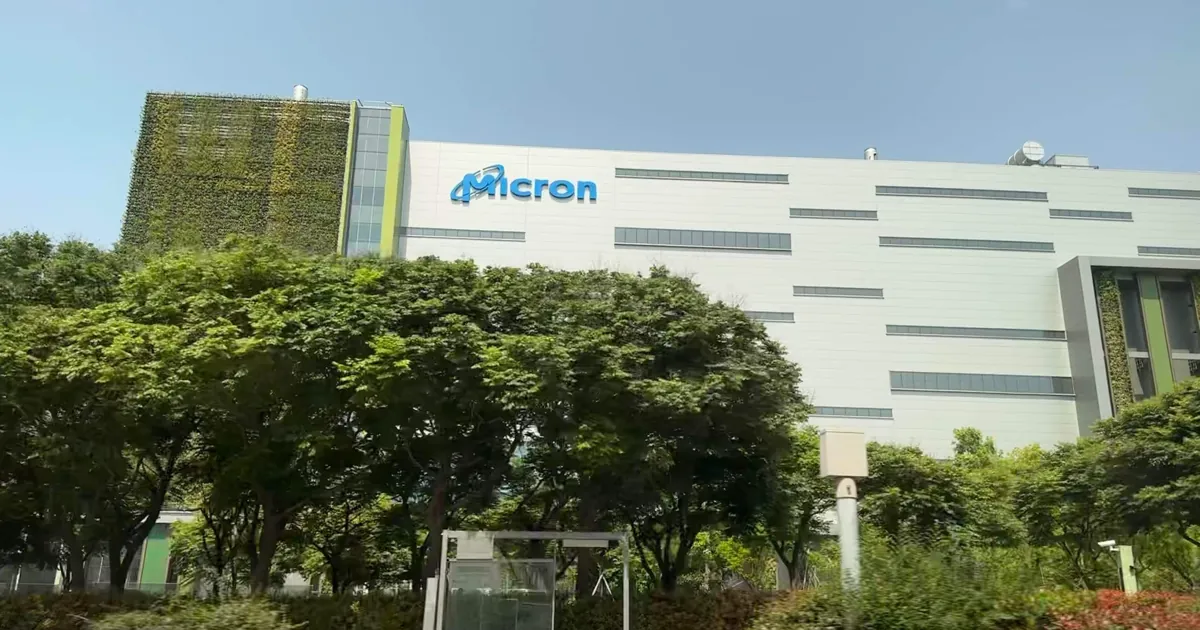
Micron, one of the three big makers of memory chips, just had the biggest quarter in its history and says the memory shortage gets worse in 2027, not better. Revenue hit $54.23 billion in the three months to September 3, 2026, almost five times what it was a year earlier, and the company told investors that supply will be "much tighter" in 2027 and 2028 than it was this year. That's good news for Micron and bad news for anyone who plans to buy RAM, an SSD, a graphics card, a console or a phone over the next two years.
Key takeaways
- Record results: Micron reported $54.23 billion in fiscal fourth-quarter revenue, up from $11.32 billion a year earlier, and guided to $61.5 billion, plus or minus $1.5 billion, for the current quarter.
- Worse, not better: Micron's CEO expects memory and storage supply to be much tighter in calendar 2027 and 2028 than in 2026, and says the company can't see when supply and demand will balance. That's Micron's forecast, not a certainty.
- Already sold: more than 75% of Micron's 2027 output is committed, and new contracts are being signed at higher prices.
- AI is the reason: data center demand, and especially HBM for AI chips, takes factory capacity that would otherwise make memory for PCs, consoles and phones.
- First visible price rises: in Japan, the Pixel 10a and the Galaxy S26 family went up by ¥12,900 to ¥35,000 on October 1. Neither Google nor Samsung gave a reason, so linking them to memory costs is an inference.
Micron earnings: a record $54 billion quarter
Micron published its fiscal fourth-quarter 2026 results on September 30, 2026. Micron's fiscal year ends in early September, so this quarter covers roughly June through August.
| Fiscal Q4 2026 | Fiscal Q3 2026 | Fiscal Q4 2025 | |
|---|---|---|---|
| Revenue | $54.23 billion | $41.46 billion | $11.32 billion |
| GAAP net income | $37.70 billion | $28.24 billion | $3.20 billion |
| GAAP gross margin | 86.8% | 84.6% | 44.7% |
For the full fiscal year, revenue was $133.19 billion, against $37.38 billion the year before, and Micron spent $27.37 billion on new equipment and buildings. For the current quarter, which ends in early December, Micron guided to $61.5 billion in revenue, give or take $1.5 billion, with a gross margin of about 86%. Gross margin is the share of revenue left after the cost of making the chips: at 86%, Micron keeps about 86 cents of every dollar, a figure more typical of software than of a chip factory.
Wall Street expected less. According to 24/7 Wall St., analysts were looking for $50.97 billion in revenue and about $57 billion in guidance. The stock closed flat at $1,065.11 after the report, having already risen about 273% this year.
The data center is where the money comes from. Micron's two data center units, Cloud Memory and Core Data Center, brought in $16.28 billion and $18.00 billion. By our math that's about 63% of the quarter's revenue.
Why the memory shortage gets worse in 2027
On the earnings call, CEO Sanjay Mehrotra said Micron expects "memory and storage supply-demand conditions to be much tighter in calendar 2027 and 2028 than they were in 2026," as CIO.com reported. He also said Micron does "not have line of sight to when supply and demand will return to balance." In other words, on the memory shortage, 2027 looks worse than 2026 by Micron's account.
Three things in the call explain why Micron is so confident:
- The output is spoken for. Mehrotra said more than 75% of Micron's 2027 output is already committed. Micron has 26 long-term deals it calls strategic customer agreements, and he said they cover more than 35% of its revenue through 2030, according to an Investing.com transcript of the call.
- Prices are still rising. CFO Mark Murphy said DRAM prices rose by a high-teens percentage in the quarter and NAND flash, the memory inside SSDs, by about 30%. Mehrotra said new long-term deals are negotiated "with higher pricing based on prevailing market conditions."
- New factories are slow. Per the same transcript, Micron's new HBM capacity in Singapore starts producing in early calendar 2027, its first new Idaho fab in mid-2027, a second Idaho fab and a Japan expansion in late 2028, and its New York fab in 2030. And Mehrotra noted that production from new fabs "takes time to ramp," so a first wafer isn't the same as relief.
The "much higher prices" line many headlines picked up is narrower than it sounds. In the transcript, Mehrotra said it about HBM: a large part of Micron's 2027 HBM volume is already sold, at prices "much higher than 2026." For ordinary DRAM and NAND, Micron said prices rose this quarter and that new contracts carry higher prices, but it didn't give a 2027 forecast for them.
How AI and HBM crowd out your memory
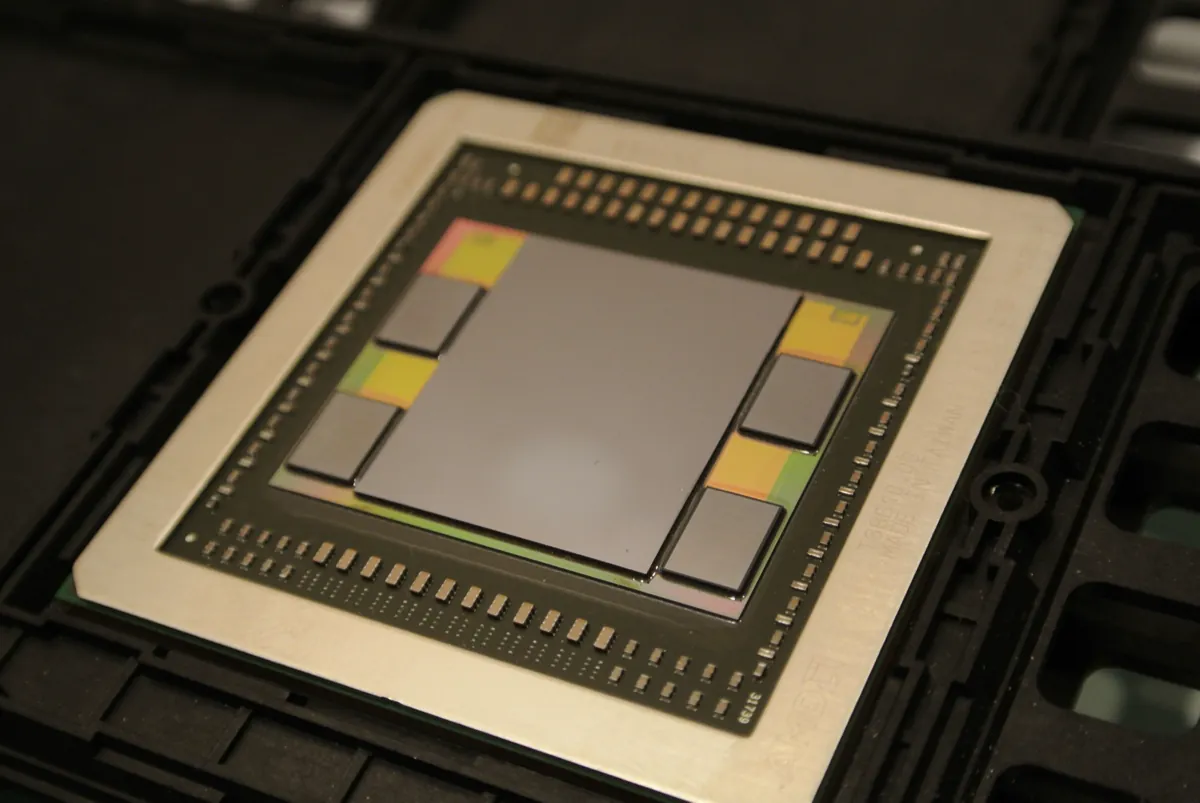
HBM, short for high-bandwidth memory, is DRAM stacked in towers and placed right next to an AI processor, so the chip can read data fast enough to keep busy. The big AI accelerators all use it, and that's the root of the problem for everyone else.
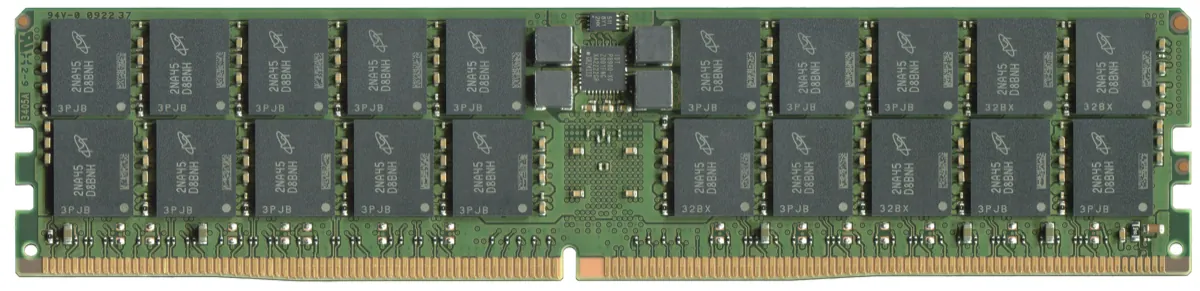
HBM costs far more factory capacity than regular memory. In December 2025, Micron said HBM has a "3-to-1 trade ratio with DDR5," as TrendForce reported: making a given amount of HBM uses about three times the wafers needed for the same amount of DDR5, the memory in PCs and servers. Every wafer that goes to HBM is memory that doesn't end up in a laptop, a console or a phone.
Micron has already picked a side. In December 2025 it announced it would exit the Crucial consumer business, the brand that sold its RAM kits and SSDs in stores, with consumer shipments ending in February 2026. The company said it made the move to "improve supply and support for our larger, strategic customers in faster-growing segments." Demand from AI is broad, too: Google is even exploring AI computing on satellites, and Nvidia, the biggest seller of AI chips, is generating enough cash to add $150 billion to its stock buyback.
Japan's Pixel 10a and Galaxy S26 price rises
A day after Micron's warning, prices moved in Japan. On October 1, Google's Japanese online store raised the Pixel 10a by ¥12,900 on both storage sizes, and Samsung raised the Galaxy S26 family on its own online shop the same day. The Japanese tech blog ORE FOLDER compiled the old and new prices:
| Model | Old price | New price | Increase |
|---|---|---|---|
| Pixel 10a, 128 GB | ¥79,900 | ¥92,800 | ¥12,900 (16%) |
| Pixel 10a, 256 GB | ¥94,900 | ¥107,800 | ¥12,900 (14%) |
| Galaxy S26, 256 GB | ¥136,400 | ¥155,800 | ¥19,400 (14%) |
| Galaxy S26, 512 GB | ¥163,900 | ¥183,300 | ¥19,400 (12%) |
| Galaxy S26 Ultra, 256 GB | ¥218,900 | ¥239,800 | ¥20,900 (10%) |
| Galaxy S26 Ultra, 512 GB | ¥246,400 | ¥268,600 | ¥22,200 (9%) |
| Galaxy S26 Ultra, 1 TB | ¥299,200 | ¥334,200 | ¥35,000 (12%) |
The Galaxy S26+ went up too, by about ¥22,200 on both sizes. The percentages are our rounding. These are Japanese prices on the companies' own stores, as of October 1, 2026. They aren't US or European prices, and nothing so far says other markets will follow.
Neither Google nor Samsung announced the change or gave a reason, according to all three Japanese reports. So the link to memory is our inference, not a fact: memory prices are rising fast, and the timing lines up with Micron's warning. But a weak yen, other component costs or a plain pricing decision could also play a part. The 128 GB Pixel 10a price is now close to what the 256 GB model used to cost. Mobasai noted that Rakuten Mobile was still selling the Galaxy S26 at its old price, so what you pay in Japan also depends on where you buy.
What it means for you
Micron's forecast is about chip supply, not shelf prices, and device makers decide how much of the cost to pass on. With that caveat, here's what a tighter 2027 plausibly means:
- RAM and SSDs: these are almost pure memory, so they move first and hardest. With DRAM up by a high-teens percentage and NAND up about 30% in a single quarter, by Micron's account, don't expect upgrade kits to get cheap in 2027.
- Graphics cards: GPUs carry their own fast memory, GDDR, a type of DRAM made by the same handful of companies. Rising memory costs put pressure on card prices, though Micron didn't break out GDDR numbers.
- Consoles: this has already happened once. Nintendo raised the Switch 2 to $499.99 in the US on September 1, and its president pointed to memory costs among the reasons in May, as Hardware Busters reported.
- Phones and laptops: Japan shows what a mid-cycle price rise looks like: phones already on sale went up by 9% to 16% overnight, with no new features to show for it.
If you need a new device soon, waiting for memory to get cheaper is a weak plan by Micron's own account, since it can't say when the shortage ends. If you don't need one, nothing here forces you to buy now.
Bottom line
Micron's record quarter is the clearest sign yet that the AI build-out is pricing everyone else out of memory. Micron itself expects 2027 and 2028 to be tighter than 2026, has most of 2027 already sold, and its first new Idaho fab doesn't start producing until mid-2027. Japan's Pixel 10a and Galaxy S26 price rises are an early, concrete example of what that can look like, though neither company tied them to memory. Watch for price changes in other markets, the next round of console and GPU pricing, and Micron's next results, expected in December.
FAQ
Why is there a memory shortage?
AI data centers are buying memory faster than the industry can make it. HBM, the stacked memory used by AI chips, uses about three times the factory capacity of regular DDR5 for the same amount of memory, according to Micron, so every shift toward AI leaves less for PCs, consoles and phones. New fabs take years to build.
When will RAM prices go down?
Nobody can say. Micron, which makes a large share of the world's DRAM, says it has no line of sight to when supply and demand return to balance, and expects 2027 and 2028 to be tighter than 2026. That's one supplier's forecast, but it's the supplier with the best view of its own order book.
Will phones get more expensive in 2027?
Some already have in Japan: the Pixel 10a and Galaxy S26 went up on October 1, 2026, though Google and Samsung gave no reason. Whether other markets follow depends on each company's pricing, currency moves and how much memory cost it chooses to absorb.
What is HBM?
HBM, or high-bandwidth memory, is DRAM stacked vertically and mounted right next to a processor, so data moves much faster than with regular memory. AI accelerators depend on it, which is why demand for HBM has driven the current shortage.