Akamai Anthropic deal: what the $11.6B CPU contract buys
The Akamai Anthropic deal is $11.6 billion over seven years for CPU cloud capacity, with room to reach about $20 billion. The warrant, the cost and the catch.
Source-based. Written from the documents, reporting and reviews linked in the text. Nothing here was tested hands-on by The Ruling Desk. How we work

Akamai and Anthropic have signed an $11.6 billion, seven-year cloud contract, Akamai announced on September 24, 2026, and the Akamai Anthropic deal buys processor capacity, not the GPUs that run Claude's models. Anthropic can add up to $9 billion more, for about $20 billion in total, and it receives a warrant for up to about 5% of Akamai's stock that vests as it spends.
Key takeaways
- $11.6 billion over seven years, committed under two new project plans signed on September 18, according to Akamai's SEC filing. Each plan's seven years start when its service goes live.
- It's CPU capacity. Akamai says the contract supports Anthropic's "accelerating CPU workload demands," and its finance chief described it as entirely CPU-based on the analyst call, per a published account of the call.
- Anthropic can add up to $9 billion in $3 billion steps. Each step vests about 1% of Akamai's stock under the warrant.
- Akamai expects to spend about $5.5 billion on equipment first, $1.7 billion of it this year, largely on memory. It expects revenue from the deal to start in the second half of 2027.
- Nothing changes for Claude users yet, and we found no statement from Anthropic on the deal as of September 25, 2026.
What the Akamai Anthropic deal covers
Akamai's press release calls it "a significantly expanded relationship" worth $11.6 billion of contractual commitment over seven years. The company's 8-K filing gives the mechanics: on September 18, the two companies signed Project Plan 2 and Project Plan 3 under a services agreement dated May 5, 2026, under which Akamai provides Anthropic "dedicated cloud computing capacity and related managed support services."
The relationship isn't new. In its first-quarter results on May 7, Akamai said an unnamed "leading, U.S. based frontier model provider" had committed $1.8 billion over seven years, and Bloomberg reported the next day that the customer was Anthropic. The filing's numbering, plans 2 and 3, suggests the new $11.6 billion comes on top of that first contract; that is our reading, not something Akamai spelled out.
The commitment has conditions. The filing says Anthropic's obligation depends on "certain delivery and service availability requirements." Anthropic can end each project plan after a material outage, subject to conditions, and can end the whole agreement if Akamai is sold to one of its direct competitors.
CPUs, not GPUs: what Akamai supplies
The press release says Anthropic will use Akamai Cloud, which Akamai describes as a network of "thousands of points of presence" running compute "from core to edge." On the analyst call, finance chief Ed McGowan said the Anthropic deal is entirely CPU-based, while Akamai's other cloud contracts mix CPUs and GPUs, according to MarketBeat's account of the call. He also said the servers will sit with several colocation providers, companies that rent out data center space and power.
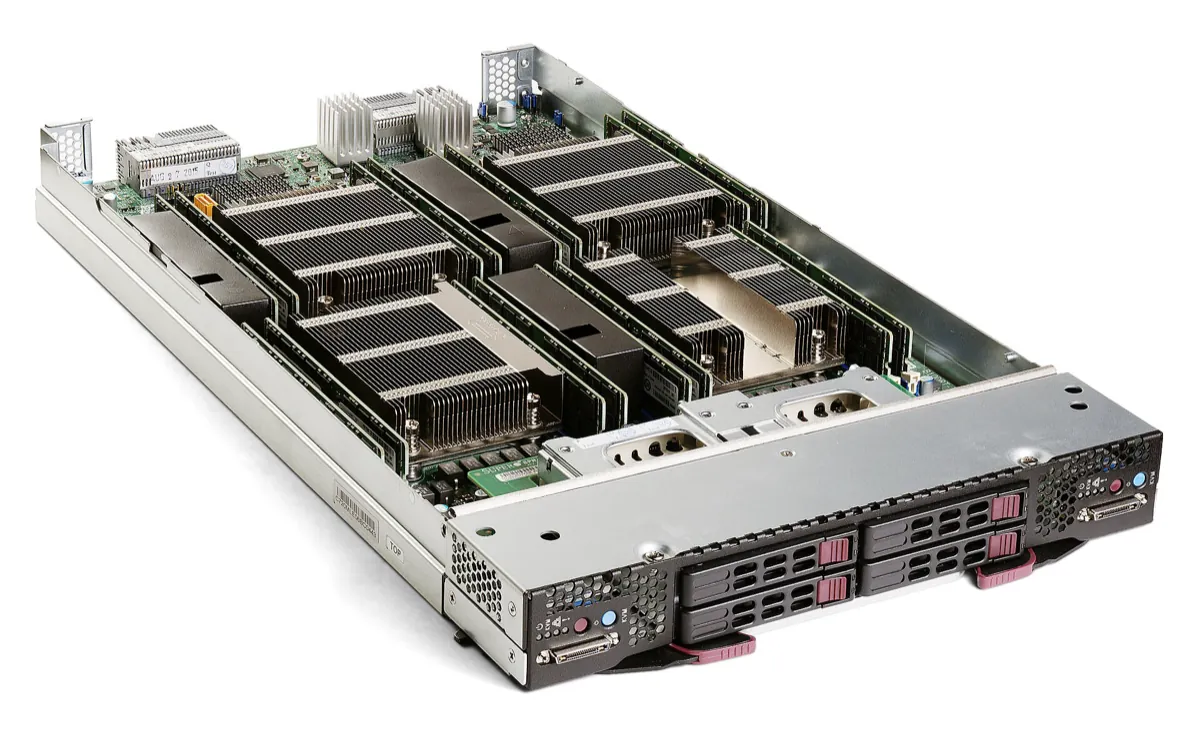
CPUs are general-purpose processors, the kind of chip in the server below. They are not the accelerators that train and run large language models. Neither company has said which Claude workloads will move to Akamai. Our inference: AI agents spend much of their time outside the model, running code, calling tools and handling files, and that work runs on CPUs. Long agent jobs, like the ones Anthropic says turned up a CRISPR-like system in viral DNA, need that kind of compute alongside the model.
How the Anthropic warrant for 5% of Akamai works
A warrant is a right to buy shares later at a fixed price. Akamai issued Anthropic one for 387,051 shares of a new non-voting preferred stock, each convertible into 20 common shares: 7,741,020 common shares in all, which Akamai puts at up to about 5% of its stock. The price is $111.33 per common share, the stock's volume-weighted average over the 30 trading days before September 18. It vests in four slices, per the filing:
| Slice of the warrant | Vests when | Share of Akamai stock |
|---|---|---|
| 40% | Anthropic makes its first payment under Project Plan 3 | About 2% |
| 20% | Anthropic commits another $3 billion | About 1% |
| 20% | A second extra $3 billion | About 1% |
| 20% | A third extra $3 billion | About 1% |
Anthropic pays cash to exercise, any time within seven years of September 18, 2026. The shares carry no vote and convert to common stock only if sold to someone outside Anthropic. By our arithmetic, exercising the whole warrant would cost about $862 million. Akamai shares rose as much as 20% in after-hours trading after the news, Investing.com reported, and the warrant is only worth exercising while the stock trades above $111.33.
The $5.5 billion Akamai spends first
Akamai estimates capital spending of about $5.5 billion for the $11.6 billion commitment. Per MarketBeat's account, McGowan put it at about $1.7 billion in the fourth quarter of 2026, $3.1 billion in 2027 and $0.7 billion in 2028. Akamai says the 2026 money will "secure and pre-purchase critical supply chain components, including memory."
The 8-K shows where some of it goes. On September 24, Akamai authorized Jabil, which builds its servers, to buy about $1.7 billion of memory components, and on September 23 it signed a seven-year hardware agreement with Lenovo. The filing doesn't tie either one to Anthropic by name, though the matching amount and term point that way.
Revenue comes later. McGowan expects it to start in the second half of 2027, adding $150 million to $300 million that year and reaching an annualized run rate of about $1.7 billion by the end of 2028, per MarketBeat. Akamai says the deal doesn't change its 2026 revenue guidance.
Why it matters for Claude users and for Akamai
For people using Claude, nothing changes now: the new capacity is due from the second half of 2027. This Anthropic compute deal shows how much capacity the company expects to need as it ships models like Claude Opus 5.5 and sells agents that run longer tasks. Neither company has promised faster service or lower prices because of it.
For Akamai, best known for delivering and protecting websites, the contract dwarfs its cloud unit. That business brought in $99 million in the second quarter, up 39% from a year earlier, SiliconANGLE notes. Piper Sandler estimated the contract at about $1.66 billion a year at full run rate, roughly four times the unit's annual recurring revenue at the end of June, and said it "drastically changes the financial profile" of Akamai, according to a Stocktwits roundup of analyst notes. Evercore ISI expects CPU work to carry higher margins than GPU work, per the same roundup.
The catch sits with Akamai. It spends most of the $5.5 billion before the revenue ramps, on behalf of one customer that can drop a project plan after a material outage, under conditions the filing doesn't spell out.
What happens next
- The full agreement: Akamai says it will file the services agreement with its quarterly report for the period ending September 30, 2026.
- Service start dates: each plan's seven-year clock starts when its capacity goes live, with revenue expected from the second half of 2027.
- The extra $9 billion: any further $3 billion commitment should show up in Akamai's filings, since each one vests another slice of the warrant.
- Anthropic's side: whether it says which Claude workloads the capacity will serve.
Bottom line
The Akamai Anthropic deal is a CPU contract, not a GPU one: $11.6 billion over seven years of general-purpose cloud capacity, which our reading ties to the agent work around Claude rather than the model itself. Anthropic gets a path to about 5% of its supplier; Akamai gets a customer Piper Sandler sizes at about four times its current cloud business, after spending $5.5 billion up front. Watch the service start dates in 2027 and whether Anthropic takes any of the extra $9 billion.
FAQ
Is Akamai providing GPUs to Anthropic?
No. Akamai describes the contract as supporting Anthropic's CPU workloads, and its finance chief said on the analyst call that it is entirely CPU-based, per MarketBeat's account.
How much of Akamai could Anthropic own?
Up to about 5%, through a warrant for 7,741,020 common-share equivalents at $111.33 each. About 2% vests with Anthropic's first payment under the new contract, and the rest only if Anthropic commits up to $9 billion more. Anthropic has to pay cash to exercise it, and the shares carry no vote while it holds them.
When does the Akamai capacity start?
Akamai expects revenue from the deal to begin in the second half of 2027. Each project plan's seven-year term starts on its own service start date, which Akamai has not disclosed.