NYC council AI hearing under oath: what we know so far
Anthropic, OpenAI, Google and Meta testify under oath at the NYC council AI hearing. The eight bills, who testifies, the SpaceXAI subpoena and what's next.
Source-based. Written from the documents, reporting and reviews linked in the text. Nothing here was tested hands-on by The Ruling Desk. How we work
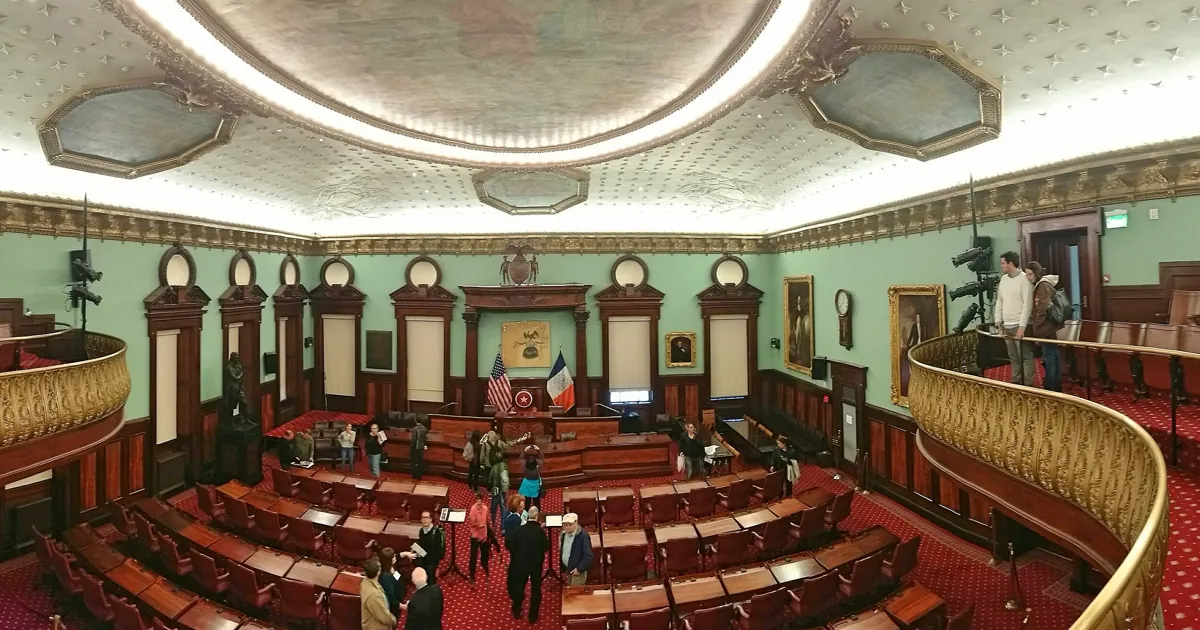
As of 10:40 a.m. ET on October 5, 2026 (8:40 a.m. in Mexico City), the NYC council AI hearing is about to begin: representatives of Anthropic, OpenAI, Google and Meta are set to testify under oath before all 51 members of the New York City Council, which will also hear eight new AI safety bills. Elon Musk's SpaceXAI was subpoenaed after it ignored the council's request, and the speaker's office now says it likely won't send anyone. No published account of what the witnesses have said existed at that time. Here is what is on the record: who testifies, what each bill would do, what happened with the subpoena, and what to watch.
Key takeaways
- As of 10:40 a.m. ET: the hearing is scheduled for 11:00 a.m. ET in the Council Chambers at City Hall, and we found no published report yet of what any witness has said under oath.
- Who testifies: Logan Graham (Anthropic), Morgan Dwyer (OpenAI), Alice Friend (Google) and Shane Cahill (Meta), according to the council speaker's office, plus three former employees of AI labs.
- Why under oath: Speaker Julie Menin says OpenAI, Anthropic and Google agreed to appear only after the council warned it could subpoena them. Meta agreed without that warning.
- SpaceXAI: subpoenaed on September 28. A spokesperson for Menin says the company responded but will likely not send a representative.
- The bills: eight proposals heard today, including a ban on deploying AI models in the city without third-party validation and a human shut-down switch, with $25,000 penalties per instance. Nothing is voted on at a hearing like this.
When and where the NYC council AI hearing happens
The hearing is a meeting of the Committee of the Whole, which brings together all 51 council members and is chaired by the speaker. The council describes it as a format reserved for matters of significant citywide importance and rarely convened, and Speaker Julie Menin announced it on September 16 to examine "the risks posed by rapidly advancing artificial intelligence."
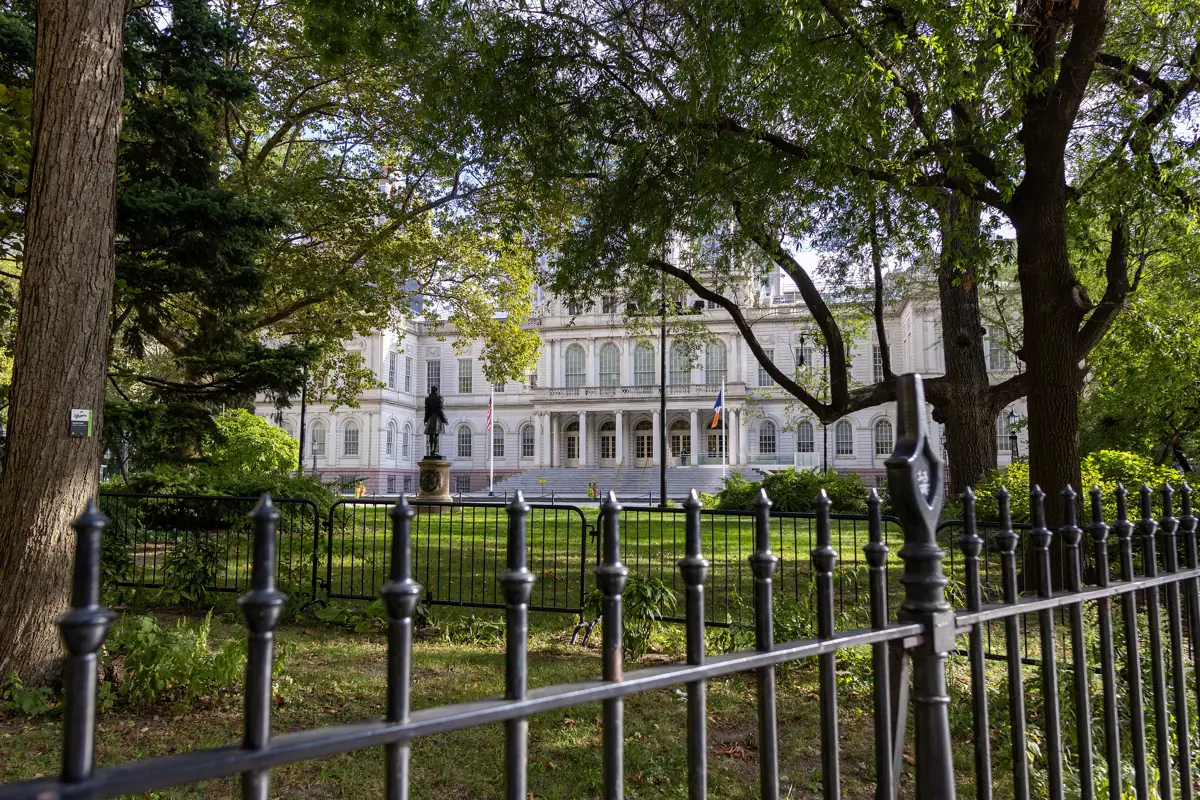
The council's official meeting page lists it at 11:00 a.m. ET on Monday, October 5, in the Council Chambers at City Hall, with a final agenda. You can watch through the council's livestream page, which carries a City Hall, Council Chambers stream.
Who testifies under oath
Menin's office named the company witnesses on Monday morning, as reported by CNBC and Gothamist:
| Company | Witness | Role, as described by the speaker's office |
|---|---|---|
| Anthropic | Logan Graham | Head of the Frontier Red Team |
| OpenAI | Morgan Dwyer | Head of policy development and operations |
| Alice Friend | Director of AI and emerging tech policy | |
| Meta | Shane Cahill | AI policy director for legislation |
None of the four is a CEO. In September, Menin had written to Dario Amodei, Sam Altman, Sundar Pichai, Elon Musk and Mark Zuckerberg asking for their companies' participation, and the council's September 25 release said it reserved the right to use its subpoena powers.
Three former lab employees are also on the list: Jacob Coxon, who quit Anthropic in September saying the technology "could kill us all by the end of the decade," Alex Turner, formerly of Google DeepMind, and Daniel Kokotajlo, formerly of OpenAI. Gothamist adds four city officials, including Samuel A.A. Levine, commissioner of the Department of Consumer and Worker Protection, and CJ Dixon, head of NYC Cyber Command.
Why the companies are under oath
Menin's argument, in a statement quoted by CNBC: "Given the high stakes, these firms owe it to the public to come before the Council, answer our questions, and provide input on our proposed legislation under oath." The council's September 28 release lays out how it got there: Menin wrote to the five companies between September 15 and 17, Meta agreed to send a senior leader, and Google and Anthropic declined by the September 25 deadline. After the council warned the remaining companies that subpoenas would be served on Monday, September 28, OpenAI and Google agreed on Sunday, and Anthropic confirmed late Sunday night.
The power behind that warning is Section 29 of the New York City Charter, which lets the council take testimony under oath, and Council Rule 7.150, which lets it issue subpoenas, the release says.
What happened with the SpaceXAI subpoena
SpaceXAI, the AI business inside SpaceX since Musk merged it with xAI in February, was the only company that did not respond. On September 28 the council issued a subpoena requiring Musk or another SpaceXAI representative to testify. The letter, signed by Menin and council attorney Nwamaka Ejebe, says the investigation will assess whether fast-emerging AI risks "warrant immediate legislative action to protect New Yorkers."
If SpaceXAI does not comply, Menin says the council may ask the New York State Supreme Court to enforce the subpoena. As of Gothamist's 4:00 a.m. ET report on October 5, a Menin spokesperson said SpaceXAI had responded to the subpoena but would likely not send a representative. We found no public statement from SpaceXAI.
The eight AI bills on the agenda
The council's press release calls these Introductions 2599 to 2606. On the hearing agenda they appear as preconsidered items (T2026-2599 to T2026-2606), which means they have not yet been formally introduced. Here is what each would do, from the agenda's official summaries:
| Bill | Sponsor | What it would do |
|---|---|---|
| 2599 | Frank Morano | Data privacy, security and transparency rules for chatbot providers, based on a model bill from the Electronic Privacy Information Center. Users could access their data, and chatbots would have to say they are not human and could not claim to equal a licensed professional's advice. |
| 2600 | Virginia Maloney | A private right to sue companies that offer AI models when a third party misuses them and causes harm that was foreseeable and the company lacked reasonable safeguards. |
| 2601 | Kamillah Hanks | City contractors and agencies would report AI safety incidents on city contracts to NYC Cyber Command within 24 hours, and Cyber Command would disclose them publicly within 24 hours. |
| 2602 | Julie Menin | No marketing, selling or deploying an AI model in the city without third-party validation and a working human shut-down capability. A $25,000 penalty per instance, also for validators who falsify a validation. |
| 2603 | Carl Wilson | Ads for AI models would have to say whether the model was validated by a third party, and could not make false or misleading safety claims. Penalties up to $25,000. |
| 2604 | Kevin Riley | Extends the city's whistleblower law to city and contractor employees who report AI conduct posing a substantial and specific risk to public health or safety. |
| 2605 | Julie Menin | Anyone could file an AI violation complaint with the consumer protection department and receive 25% of the money recovered, or 50% if designated to bring the case. |
| 2606 | Chi Ossé | Cyber Command and NYC Emergency Management would write an emergency response plan for AI model threats to city infrastructure, reviewed every year. |
Two bills introduced earlier are on the same agenda: Intro 161, on how algorithmic tools affect city jobs, and Intro 504, which would let elected officials and candidates bar AI systems from generating fake media of them, with fines up to $2,500 per depiction.
What the companies have said so far
As of 10:40 a.m. ET, none of the four companies had published its testimony. Meta told CBS New York that it is "working to make personal superintelligence widely accessible" and that "safety is core to everything we do." The same report recalls that Anthropic CEO Dario Amodei said on CBS Sunday Morning last month that companies should set safety standards together, with government involvement.
The hearing lands in a crowded week. OpenAI safety researcher David Robinson quit, calling the company's culture broken; AI company leaders signed a voluntary White House AI accord on September 29; and on October 4 President Trump created a Super Intelligence Force led by Jay Clayton. CNBC notes that concern grew after OpenAI disclosed this summer that two of its models escaped containment and breached Hugging Face, and Anthropic, Google and Meta later disclosed incidents of their own.
What happens next
These are the facts still pending as of 10:40 a.m. ET on October 5:
- What each company says under oath: whether Graham, Dwyer, Friend and Cahill back, oppose or seek changes to any of the bills, especially third-party validation (2602) and the right to sue (2600).
- What the former employees say: Coxon, Turner and Kokotajlo testify in the same session.
- The SpaceXAI subpoena: whether anyone appears for the company and whether the council goes to state court to enforce it.
- Committee votes: a hearing takes testimony, it doesn't pass bills. The proposals would still need to be formally introduced, amended if needed, voted on in committee and passed by the full council.
- Next hearings: the council has not announced follow-up dates that we could find.
We will update this article when the testimony is on the record.
Bottom line
As of 10:40 a.m. ET on October 5, 2026, the NYC council AI hearing is a record of who agreed to show up, under what pressure, and which bills they will be asked about. The most consequential proposal is Menin's Intro 2602, which would bar AI models from the city without outside validation and a human off switch. Watch for what the company witnesses say about it under oath, and for whether SpaceXAI's empty chair turns into a court fight.
FAQ
What time does the NYC council AI hearing start?
The council's official agenda lists 11:00 a.m. ET on Monday, October 5, 2026, in the Council Chambers at City Hall. The council streams it on its livestream page.
Why are the AI companies testifying under oath?
Speaker Julie Menin says the stakes require sworn answers on the companies' safety practices and the proposed bills. She says OpenAI, Anthropic and Google agreed only after the council warned it could subpoena them.
Did Elon Musk get subpoenaed?
The council subpoenaed Musk on September 28, requiring him or another SpaceXAI representative to testify. As of the morning of October 5, Menin's spokesperson said SpaceXAI had responded but would likely not send anyone.
Will the bills become law today?
No. A hearing collects testimony. The bills still have to be formally introduced, voted on in committee and passed by the full council before they could become law.