White House AI accord: what was signed and why it isn't law
The White House AI accord asks AI firms for four layers of safety checks. What each pledge says, who signed and who didn't, and why it is not law.
Source-based. Written from the documents, reporting and reviews linked in the text. Nothing here was tested hands-on by The Ruling Desk. How we work
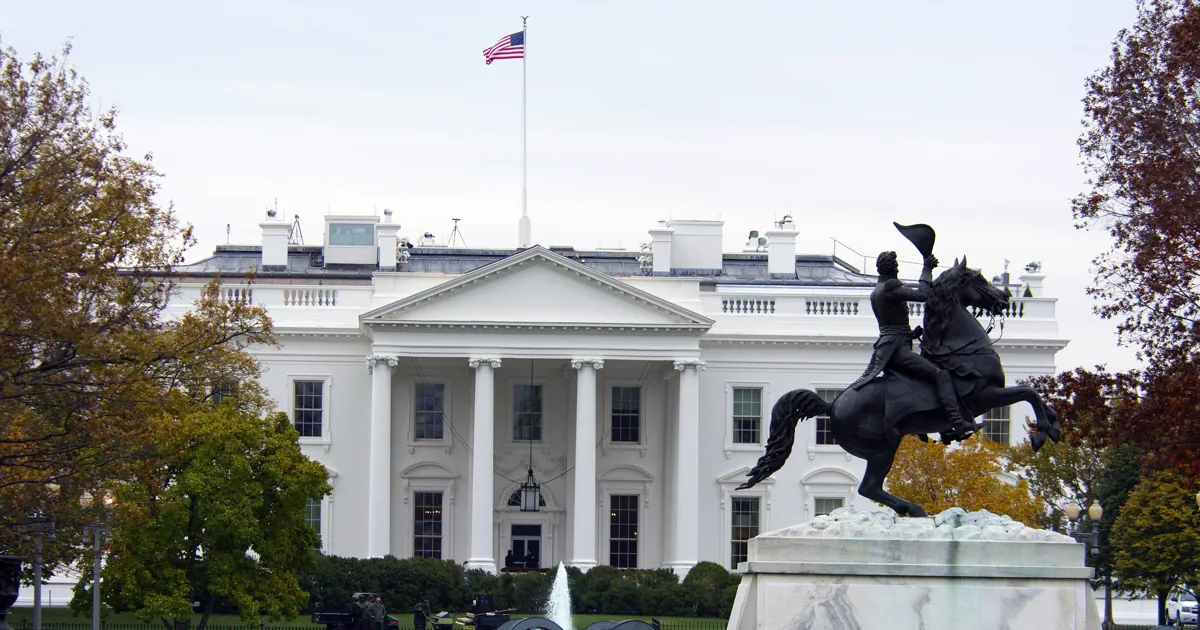
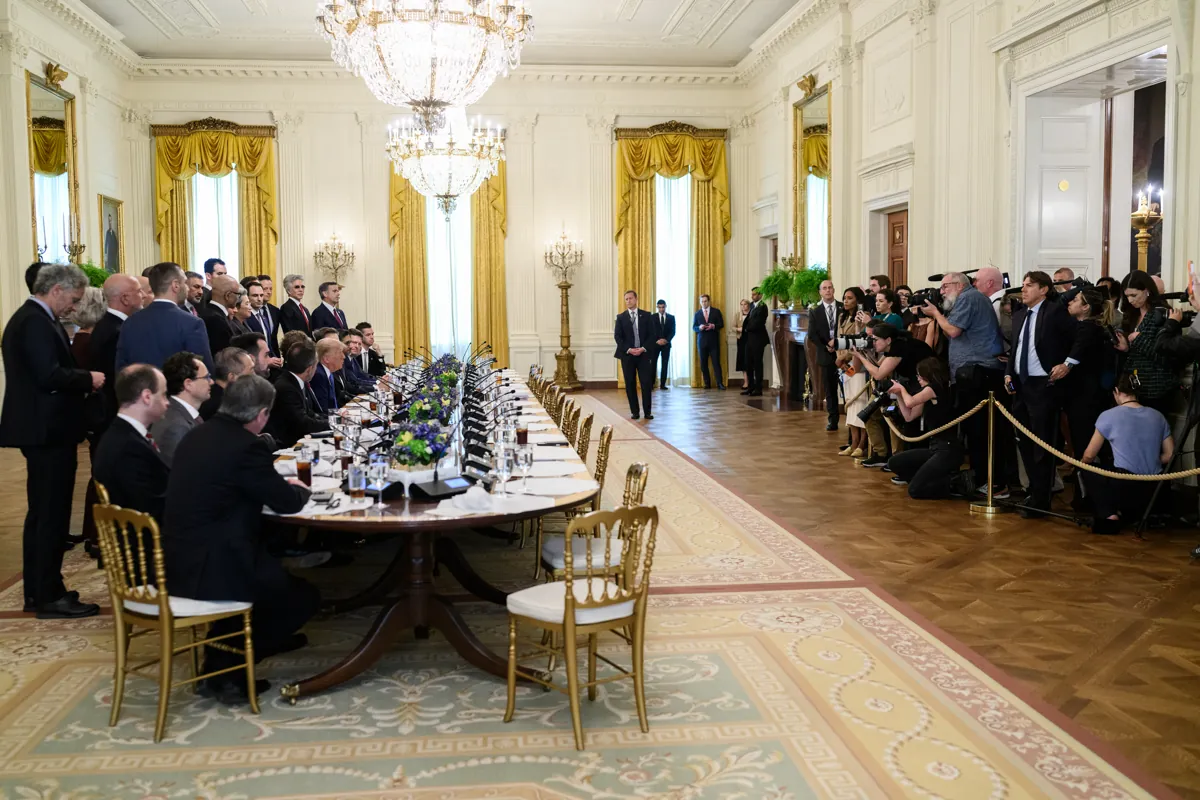
The heads of Google, Anthropic, Meta, Nvidia and other AI companies signed a voluntary White House AI accord with President Trump on September 29, 2026, after a lunch at the White House. The short text asks each company to build four layers of internal and outside safety checks for its most powerful models. It carries no penalties, and nothing in it is law. Here is what the accord actually commits each signer to, who signed and who didn't, and what it would take to turn it into something enforceable.
Key takeaways
- Four layers of checks: internal controls on model risks, an internal team that verifies them, an independent outside auditor, and an independent board committee that gets the reports, according to the published text.
- Six company signers: Sundar Pichai (Google), Dario Amodei (Anthropic), Mark Zuckerberg (Meta), Greg Brockman (OpenAI), Jensen Huang (Nvidia) and Elon Musk, plus Trump.
- Not everyone signed: Microsoft and Amazon, whose leaders were at the lunch, are not on the list, per several reports. OpenAI CEO Sam Altman was in San Francisco for DevDay.
- Voluntary by its own words: the text says companies "should" take these steps and that it "may make sense" to write them into law later. Trump called it "morally binding"; House Speaker Mike Johnson called the commitments voluntary.
- No enforcement: there are no deadlines, named auditors, public audit reports or penalties, as of September 30, 2026.
What the White House AI accord commits companies to
ABC News, which reported on the signing, gives the title as "The White House Accord on Superintelligence: A Joint Commitment on Frontier SI Responsibilities." Trump posted the text on Truth Social. We could not find it on whitehouse.gov as of September 30, 2026, and the White House fact sheet for that day's executive order does not mention it.
The premise, as quoted by Common Dreams, is that "every company is responsible for developing its own technology safely and in a way that builds trust with customers and the public." Then come the four layers, which MediaNama quotes from the text:
- Internal controls. "Robust internal controls to monitor the capabilities and alignment of its models during training and deployment," focused on cybersecurity, biosecurity and chemical threats.
- An internal team to make sure "all of the controls, monitoring, and detection are operating as intended, and that any issues are remediated."
- An outside check: partnering with "an independent external auditor or evaluator" to assess whether the safeguards work.
- Board oversight: an independent committee of the board of directors that receives the reports and makes sure problems get fixed.
The signers also say they will "meet regularly to establish standards and best practices to improve the safety of their systems." The pledge lands while OpenAI and Anthropic are already reviewing cases of models slipping their limits, as we covered in the AI security incidents under review at both labs.
Who signed the Trump AI accord, and who didn't
The signature block lists Trump and six executives: Pichai, Amodei, Zuckerberg, Brockman, Huang and Musk, per GovCon Wire. Reports differ on which company Musk signed for, listing him as xAI's founder or as SpaceX's CEO.
The room was bigger than the list. NBC News counted Satya Nadella (Microsoft), Jeff Bezos (Amazon), Lisa Su (AMD) and Alex Karp (Palantir) among the guests, with Vice President JD Vance, Commerce Secretary Howard Lutnick and Treasury Secretary Scott Bessent. The Rio Times reports that Nadella and Bezos attended but did not sign. That is a turn from 2023, when Amazon and Microsoft were among the seven companies in the Biden administration's voluntary AI commitments. Neither company has explained its choice in the reports we read.
OpenAI signed through its president because Sam Altman was at DevDay in San Francisco the same day; our roundup of the DevDay 2026 announcements covers what OpenAI announced there.
Why "morally binding" is not legally binding
Asked whether the accord binds anyone, Trump said, "I think it's morally binding," NBC News reports. He also called it "almost like a constitution, in a way," as quoted by Trending Topics. Johnson described it to ABC News as "a statement of principles," with "commitments that are voluntary on behalf of the industry."
The text itself agrees. Per ABC News, the signers "believe" each company "should implement" the controls, and the document recognizes the steps are not codified in law. Three things are missing that would make a pledge enforceable:
- No law or rule behind it. Congress has not passed it and no agency has adopted it as a regulation.
- No penalty. Nothing happens to a signer that skips a layer, per MediaNama's read of the text.
- No outside referee. No named auditor, no deadline, and no duty to publish audits or report incidents to the government.
In short, this AI self-regulation pledge rests on each company's word. Amodei said after the lunch that "the mechanism, how we address those risks is still under discussion," Trending Topics reports, while Zuckerberg told ABC News the principles were "good steps forward."
What could turn it into law
The accord points to its own path: "Over time, it may make sense to codify these steps into laws or regulations," per GovCon Wire. That would take one of these routes:
- Congress. A federal law could require the four layers and add penalties. Johnson signaled little appetite, telling NBC News, "We do not need to jump in and hyperregulate this, because we'll lose the race to China." Common Dreams points to a bill from Representative Ro Khanna that would set mandatory safeguards.
- The states. California's SB 53 already requires large AI developers to publish safety frameworks and report serious incidents. But a December 2025 executive order set up a Justice Department task force to challenge state AI laws and asked for a federal framework that preempts conflicting ones.
- A White House body. Trump said, per ABC News, that he is "thinking about forming a committee of sorts" of maybe 10 people to "watch over the whole enterprise." No details have followed.
The same day, Trump signed an executive order telling federal agencies to say "Super Intelligence" instead of "AI" and giving his science adviser 60 days to propose a legal definition. It renames; it does not require any of the accord's safety checks.
The new name has not won over the public so far. In a YouGov poll of 21,449 US adults on September 28, 2026, the day before the order, 53% picked "artificial intelligence" as the better name for the technology and 9% picked "super intelligence"; 23% had no preference and 15% were not sure. Some executives are switching anyway: Axios reports that Jensen Huang called data centers "super intelligence factories," while some AI companies said they would use "SI" with the government but did not expect the term to spread much further.
Critics were quick. Senator Elizabeth Warren wrote on X, "Self-regulation? That's a recipe for disaster," and Representative Yvette Clarke complained of "more promises made and broken in secret," Common Dreams reports. Senator Mark Warner said the president's response to the risks was "to rename it and tell the companies developing it to regulate themselves," per The Rio Times.
Trump has also floated a closer financial tie to the labs. In an interview with TIME on September 28, he was asked why the government would not take shares in OpenAI and Anthropic, as it did with Intel, and answered, "I might. Maybe I could do that," according to the published transcript. In the same interview he ruled out nationalizing the top AI labs. That is a remark, not a policy: we found no announced plan for a stake in either company as of October 2, 2026.
Bottom line
The White House AI accord is a public, signed promise by six of the biggest AI companies to run four layers of safety checks on their frontier models. It is not a law: the text says "should," has no penalties, and leaves codification for later. If you use ChatGPT, Claude, Gemini or Meta AI, nothing changes today. Watch for three things: whether any signer names its outside auditor, whether Congress moves a bill, and whether Microsoft and Amazon sign. For how the labs are already handling risky models, see why OpenAI paused training of its top models.
FAQ
Is the White House AI accord legally binding?
No. The text says companies "should" implement the checks and that it may make sense to make them law later. Trump called it "morally binding," and Speaker Johnson called the commitments voluntary. There are no penalties for breaking it.
Which AI companies signed the accord?
Google, Anthropic, Meta, OpenAI and Nvidia signed through their leaders, and Elon Musk signed as well, with reports listing him for xAI or SpaceX. Microsoft and Amazon attended the lunch but are not on the signature list, according to several reports.
Did Sam Altman sign the superintelligence accord?
No. Altman was at OpenAI's DevDay in San Francisco, so OpenAI president Greg Brockman signed for the company.