Gorgon Halo vs RTX Spark: what AMD claims before launch
Gorgon Halo vs RTX Spark, before anyone tests both: AMD's own figures, the 192GB vs 128GB memory gap, today's prices, and what to watch on October 7.
Source-based. Written from the documents, reporting and reviews linked in the text. Nothing here was tested hands-on by The Ruling Desk. How we work
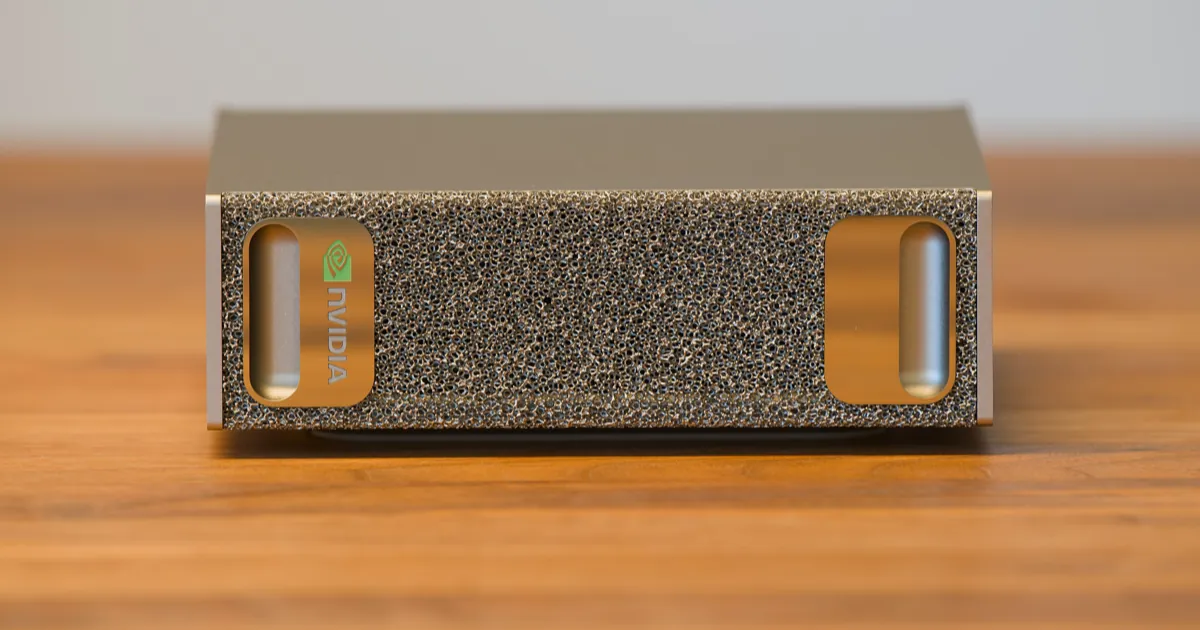
AMD has put out its first AI benchmarks for Gorgon Halo two days before Nvidia's RTX Spark is expected to launch, so the Gorgon Halo vs RTX Spark question now has numbers on one side only. They are AMD's own "up to" figures from a press briefing, no independent test of either chip exists yet, and AMD didn't even compare against RTX Spark. What is solid is the memory gap: up to 192GB on AMD's side against 128GB on Nvidia's.
Key takeaways
- AMD's figures, not test results: AMD says its top Gorgon Halo chip, the Ryzen AI Max+ PRO 495, reaches up to 42 tokens per second on Qwen 3.8 Flash Next and up to 20 on the 320-billion-parameter GLM 5.3 Flash. Both are peak numbers from AMD's own runs.
- No head-to-head yet: AMD compared Gorgon Halo with an Intel chip, not RTX Spark, and nobody has published a test of RTX Spark hardware.
- Memory is the clear difference: AMD says Gorgon Halo supports up to 192GB of unified memory, with up to 160GB for the GPU. Nvidia lists RTX Spark at up to 128GB.
- The 192GB machines cost thousands: the Gorgon Halo PCs AMD's figures are based on list from $6,399 to $9,249 in the US, depending on the maker and the promotion. RTX Spark prices are unannounced.
- The next answer comes Wednesday: Microsoft's Windows and Surface event on October 7 features Nvidia's Jensen Huang, and RTX Spark pricing is expected but not confirmed.
What AMD claims for Gorgon Halo
Gorgon Halo is the codename for AMD's Ryzen AI Max 400 and Max PRO 400 series, chips that put the CPU, graphics and a large shared memory pool in one package. That pool, called unified memory, is what lets a small PC load large AI models. AMD says systems built on them went on sale on September 28, and on October 5 it followed up with benchmarks shared in a press briefing, reported by Tom's Hardware.
Here is what AMD claims, all for the Ryzen AI Max+ PRO 495 in its 192GB configuration:
- GLM 5.3 Flash: up to 20 tokens per second on a model with 320 billion total parameters, of which about 18 billion are active per token, using Unsloth's UD-IQ4_XS compressed format.
- Qwen 3.8 Flash Next: up to 42 tokens per second on a mixture-of-experts model with about 5 billion parameters active per token, using Unsloth's 4-bit format and multi-token prediction, a trick that drafts several tokens at once.
- Image generation in ComfyUI: between 1.1 and 32.2 times the throughput of Intel's Core Ultra X9 388H, which AMD tested with 64GB of memory. Tom's Hardware calls the 32.2x result a clear outlier and couldn't find the model behind it on Hugging Face.
AMD also told reporters it had shipped "over half a million" agentic PCs, its name for machines built to run AI agents locally. According to Tom's Hardware, AMD first said "10s of millions" in the briefing before clarifying the figure, and the outlet presumes the half million counts Strix Halo and Gorgon Halo devices. AMD hasn't published that number itself.
Why "up to" carries the weight
A tokens-per-second figure is how fast a model writes its answer. A peak number usually comes from a short prompt on a fresh session. As the conversation or document grows (the context length), speed falls, and Tom's Hardware warns that a model starting at 20 tokens per second could slow to unusable territory on long contexts. AMD's figures as reported don't say how they hold up there.
Some independent numbers exist, but not for these chips. Tom's Hardware measured Nvidia's DGX Spark at 64 tokens per second and AMD's previous Ryzen AI Max+ 395 at 56 on GPT-OSS 120B, a different model from the ones AMD used, so they don't line up with AMD's new figures. In the outlet's own review of AMD's Ryzen AI Halo developer box, the older AMD chip trailed the DGX Spark on both response time and speed across three models.
That matters because both new chips have close relatives already on the market. Tom's Hardware describes Gorgon Halo as largely a refresh of Strix Halo: the same cores, 192GB instead of 128GB of memory, and a 100 MHz higher boost clock on the 495. It also says RTX Spark and the GB10 chip in the DGX Spark are nearly identical. That points to Nvidia holding a speed edge and AMD a capacity edge, but it's an inference from older chips, not a result for the new ones.
Gorgon Halo vs RTX Spark on paper
Here is how the two compare using only what each company has published. Where a cell says "unannounced," neither Nvidia nor its partners have said.
| Gorgon Halo (Ryzen AI Max+ PRO 495) | RTX Spark (top version) | |
|---|---|---|
| CPU | 16 Zen 5 cores (AMD) | 20-core Grace CPU (Nvidia) |
| Graphics | 40 compute units (AMD) | 6,144-core Blackwell RTX GPU (Nvidia) |
| Maximum unified memory | 192GB, up to 160GB for the GPU (AMD) | 128GB (Nvidia) |
| Largest model, vendor claim | More than 300 billion parameters at 4-bit (AMD) | 120 billion parameters with a 1 million token context (Nvidia) |
| AI compute, vendor figure | 55 TOPS from the NPU (AMD) | Up to 1 petaflop at FP4 (Nvidia) |
| On sale | Since September 28 (AMD) | "This fall," expected October 7 |
| US price | About $6,400 to $9,250 for 192GB systems | Unannounced |
The specs come from AMD's launch post, Nvidia's RTX Spark product page and its Computex announcement on June 1. Two cautions: the AI compute figures measure different things on different parts of each chip, so they don't compare directly, and Nvidia's page lists a smaller RTX Spark laptop chip with up to 64GB alongside the 128GB one.
The model-size claims are where the memory gap shows. AMD's ceiling of 300 billion parameters and Nvidia's example of a 120 billion parameter model aren't measured the same way, but a 192GB pool simply holds bigger models than a 128GB one. Tom's Hardware's caution applies here too: more memory lets you run larger models, not run them faster.
What 192GB Gorgon Halo PCs cost today
Gorgon Halo hardware is expensive, and the 192GB configurations are the ones AMD's benchmarks used. TechRadar's October 2 roundup lists these US prices for Ryzen AI Max+ PRO 495 systems with 192GB:
- Minisforum MS-S1 MAX-P495 (2TB storage): $7,399 in a limited promotion, $9,249 regular.
- HP ZBook Ultra G3a: about $7,449, by TechRadar's calculation.
- GMKtec EVO-X5 Pro: $6,399 in an early-bird promotion.
Tom's Hardware puts top configurations at around $7,000 and expects prices to climb above that as more devices arrive. Memory is a big part of the bill: the same shortage has pushed Nvidia's 128GB DGX Spark to $6,950, as we covered in the DGX Spark 64GB launch. Whatever Nvidia charges for a 128GB RTX Spark machine will be the number to compare against.
What to watch at Microsoft's October 7 event
Microsoft's Windows and Surface event starts at 10 AM PT on Wednesday, October 7, in San Francisco, with Satya Nadella, Windows and devices chief Pavan Davuluri and Nvidia's Jensen Huang, according to Windows Central. Engadget reports that Microsoft promises "latest innovations across Windows, NVIDIA RTX Spark, Surface and the broader PC ecosystem."
Microsoft has already announced two RTX Spark devices, the Surface Laptop Ultra and the Surface RTX Spark Dev Box, without prices or dates. Here's what would settle the most open questions:
- The price of a 128GB RTX Spark machine. That decides whether AMD's extra 64GB is a bargain or a premium.
- Nvidia's own speed figures, with their conditions. Which models, which format, which context length. AMD's "up to" numbers need a like-for-like answer.
- Ship dates for RTX Spark laptops and desktops. Nvidia has only said "this fall."
- The first independent reviews of both chips. Until then, every number in this article is a vendor's.
What it means for you
If you're weighing Gorgon Halo vs RTX Spark for a box that runs local AI models, the choice depends on what you load. For the biggest open models, Gorgon Halo's 192GB configurations hold more than any RTX Spark machine will, going by Nvidia's specs, and you can buy one today. For mid-size models where speed matters more, the older evidence favors Nvidia's design, but RTX Spark isn't on sale and has no price. For most people, waiting a few weeks for both prices and independent tests costs nothing.
These are workstation prices. For gaming or everyday work, neither chip is the sensible buy, and you can follow the cheaper side of the market in our gadgets section.
Bottom line
AMD has shown its own best-case numbers first: up to 42 tokens per second on one model, up to 20 on a much larger one, and 192GB of memory that RTX Spark can't match on paper. None of it has been independently tested, and RTX Spark has no public benchmarks or price yet. Watch Wednesday's event for Nvidia's price and figures, then wait for reviews that run both chips on the same models and long contexts.
FAQ
Is Gorgon Halo faster than RTX Spark?
Nobody knows yet. AMD hasn't compared the two, and no independent test of RTX Spark hardware is out. The closest evidence comes from their predecessors: in Tom's Hardware's testing, Nvidia's DGX Spark outran AMD's previous Ryzen AI Max chip, which suggests Nvidia may lead on speed and AMD on memory.
How much memory does RTX Spark have?
Nvidia lists the top RTX Spark chip with up to 128GB of unified memory and a smaller laptop version with up to 64GB. AMD says Gorgon Halo goes up to 192GB, with up to 160GB available to the graphics side.
When does RTX Spark launch?
Nvidia has said RTX Spark laptops and compact desktops arrive "this fall." The launch is expected at Microsoft's Windows and Surface event on October 7, 2026, but Nvidia hasn't confirmed a date or prices.
How much does a Gorgon Halo PC cost?
As of early October 2026, 192GB Gorgon Halo systems list from $6,399 to $9,249 in the US, depending on the model and the promotion. Those are the configurations behind the benchmarks AMD shared.