Galaxy S26 price increase: old vs new, plus the Pixel 10a
The Galaxy S26 price increase adds $100 to most models in the US, and the Pixel 10a rose $100 too. Old vs new prices, the memory link, and whether to buy now.
Source-based. Written from the documents, reporting and reviews linked in the text. Nothing here was tested hands-on by The Ruling Desk. How we work
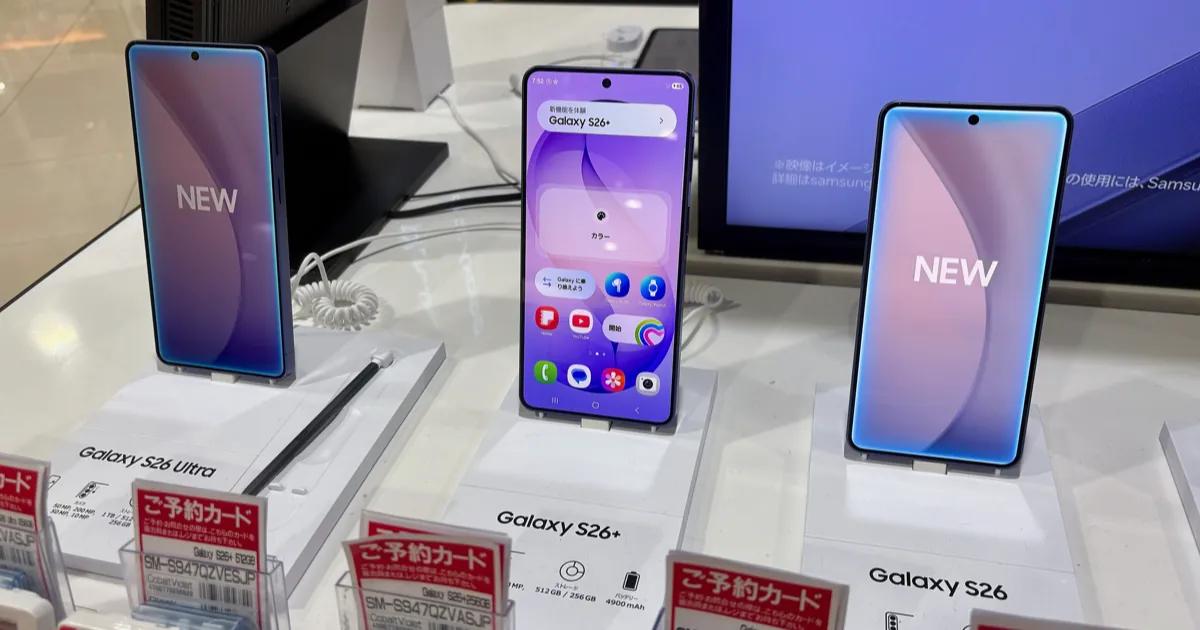
The Galaxy S26 price increase is real and it isn't small: since October 1, 2026, Samsung charges $100 more in the US for every 256 GB and 512 GB Galaxy S26, S26+ and S26 Ultra, and $200 more for the 1 TB Ultra. A day later, Google quietly raised the Pixel 10a by $100 too. Both phones were already on sale, so you're paying more for exactly the same hardware. Neither company explained the change, but the coverage, and Google's own comments in July, point at the memory chip shortage.
Key takeaways
- Galaxy S26 now starts at $999.99 in the US, up from $899.99. The S26+ starts at $1,199.99 and the S26 Ultra at $1,399.99; the 1 TB Ultra is $1,999.99.
- Pixel 10a now starts at $599, up from $499, and the 256 GB model is $699, up from $599.
- No official reason for either change. Outlets tie both to soaring memory prices, and Google warned in July that phones already on sale would see "adjustments" because of a RAM crisis.
- Not every model moved: the Galaxy S26 FE is still $699.99, and Samsung's foldables and tablets weren't part of this round, per The Next Web.
- Waiting for a price drop is a weak bet for now: nobody has said these prices are temporary, and Micron expects memory to get tighter in 2027.
Galaxy S26 price increase: old vs new US prices
Bloomberg first reported the change on October 1, and Android Authority listed the old and new price of every model. We checked the new figures against Samsung's own US store on October 3: the Galaxy S26 and S26+ buy page shows $999.99 and $1,199.99, and the S26 Ultra buy page shows $1,399.99, $1,599.99 and $1,999.99.
| Model | Old US price | New US price | Increase |
|---|---|---|---|
| Galaxy S26, 256 GB | $899.99 | $999.99 | $100 |
| Galaxy S26, 512 GB | $1,099.99 | $1,199.99 | $100 |
| Galaxy S26+, 256 GB | $1,099.99 | $1,199.99 | $100 |
| Galaxy S26+, 512 GB | $1,299.99 | $1,399.99 | $100 |
| Galaxy S26 Ultra, 256 GB | $1,299.99 | $1,399.99 | $100 |
| Galaxy S26 Ultra, 512 GB | $1,499.99 | $1,599.99 | $100 |
| Galaxy S26 Ultra, 1 TB | $1,799.99 | $1,999.99 | $200 |
| Pixel 10a, 128 GB | $499 | $599 | $100 |
| Pixel 10a, 256 GB | $599 | $699 | $100 |
Prices are US list prices on the makers' own stores, before trade-in or carrier deals, as of October 3, 2026.
Samsung didn't publish a statement or a reason in the US, according to Android Authority. The Next Web reports that the cheaper Galaxy S26 FE stayed at $699.99 and that foldables and tablets weren't touched. For the base S26, the jump is about 11%, and it pushes the entry flagship to the edge of $1,000. The Galaxy S26 Ultra price now tops out at $1,999.99 for 1 TB.
The Pixel 10a goes from $499 to $599
Google made no announcement. 9to5Google noticed on October 2 that the Pixel 10a now starts at $599 on the Google Store, with the 256 GB model at $699, and that Amazon and Best Buy already showed the new prices. Android Police confirms the old prices were $499 and $599, so both storage sizes went up by $100. The US Google Store page still read "From $599" when we checked on October 3.
That's a 20% increase on the base model, so this Pixel 10a price increase lands harder than Samsung's. The Pixel 10a's whole pitch was a good phone under $500. It also still runs the Tensor G4, a chip two generations old, as 9to5Google points out. At $699, the 256 GB Pixel 10a now costs about the same as a 128 GB Galaxy S26 FE.
Why the memory shortage gets the blame
Neither company tied these specific changes to memory. The link comes from two places.
First, the coverage. Android Authority, The Next Web and Android Police all connect the increases to the global shortage of DRAM, the working memory in a phone, and NAND, its storage. Korea's Seoul Economic Daily cites market tracker DRAMeXchange: average DRAM prices hit $26 at the end of September, double the $13 of March, when the Galaxy S26 launched. That's the outlets' reading of the timing, not Samsung's stated reason.
Second, Google said it was coming. In July, Google's vice president of devices and services, Shakil Barkat, told 9to5Google that Pixel prices would see "adjustments" because of a "severe, supplier-driven RAM memory crisis," and that this would also reach "in-market Pixel phones." Google didn't comment on the Pixel 10a change itself, but that's as close to a reason as either company has given.
The supply side isn't easing. Micron, one of the three big memory makers, just posted a record $54 billion quarter and warned the memory shortage gets worse in 2027. Its CEO said supply will be "much tighter in calendar 2027 and 2028 than they were in 2026," as CIO.com reported. AI data centers are buying memory faster than factories can make it, and phones compete for what's left.
Not just the US
The same week, Samsung raised the Galaxy S26 family in other markets:
- South Korea: about 149,600 won more on the 256 GB models, and about 270,000 won more on the 1 TB Ultra, now 2,821,500 won, per Seoul Economic Daily.
- Italy: about €100 more on most models and €200 more on the 1 TB Ultra, now €2,199, according to GizChina.it.
- Japan: both the Pixel 10a and the Galaxy S26 family went up on October 1, as we covered in our Micron analysis.
Should you buy now or wait?
Nobody can promise where these prices go next, so here's what you can act on today:
- Check retailers and carriers before the maker's store. Android Authority still saw the old Galaxy S26 prices on some Amazon listings on October 1. Third-party stock can lag a price change, though for the Pixel 10a, Amazon and Best Buy had already updated.
- Lean on trade-in. Both Samsung's and Google's US stores run trade-in programs, and the credit depends on the phone you hand in. A good trade-in can offset more than the $100 increase, but check the quote for your own model.
- Look one tier down. The Galaxy S26 FE kept its $699.99 starting price. If you were weighing the 256 GB Pixel 10a, compare it with the FE first.
- Don't wait for a rollback. Nothing suggests the Galaxy S26 price increase will be reversed: neither company called these prices temporary, and the memory supply outlook for 2027 is worse, not better, by Micron's own account. If your phone is failing, waiting is unlikely to save you money. If it isn't, there's no reason to rush either.
For more phone and gadget news, see our gadgets section.
Bottom line
As of October 3, 2026, a Galaxy S26 costs $999.99 and a Pixel 10a costs $599 in the US, $100 more than a week ago, for the same phones. Samsung and Google didn't explain the changes; the memory explanation is what the coverage infers, backed by Google's July warning and by DRAM prices that, per DRAMeXchange, doubled since March. If you were going to buy anyway, check retailer stock and trade-in offers first. Watch whether other phones already on sale follow, and whether more markets see the same increases.
FAQ
How much is the Galaxy S26 now?
The Galaxy S26 starts at $999.99 in the US for 256 GB, up from $899.99, as of October 1, 2026. The S26+ starts at $1,199.99 and the S26 Ultra at $1,399.99, with the 1 TB Ultra at $1,999.99.
Why did the Pixel 10a price go up?
Google didn't say. Coverage links it to rising memory prices, and in July a Google vice president said a RAM crisis would lead to price adjustments for Pixel phones already on sale. Treat the memory link as likely, not confirmed for this specific change.
Did the Galaxy S26 FE go up in price?
No. The Galaxy S26 FE still starts at $699.99 in the US for 128 GB on Samsung's store, as of October 3, 2026.
Will phone prices keep going up?
Nobody can say for sure. Micron expects memory supply to be tighter in 2027 and 2028 than in 2026, which keeps pressure on phone makers, but each company decides how much of that cost it passes on.