California AI firing law: what 5 new rules require and when
California's AI firing law, SB 947, came with four more AI bills. What each requires of employers and lawyers, when it starts, and what workers can do.
Source-based. Written from the documents, reporting and reviews linked in the text. Nothing here was tested hands-on by The Ruling Desk. How we work
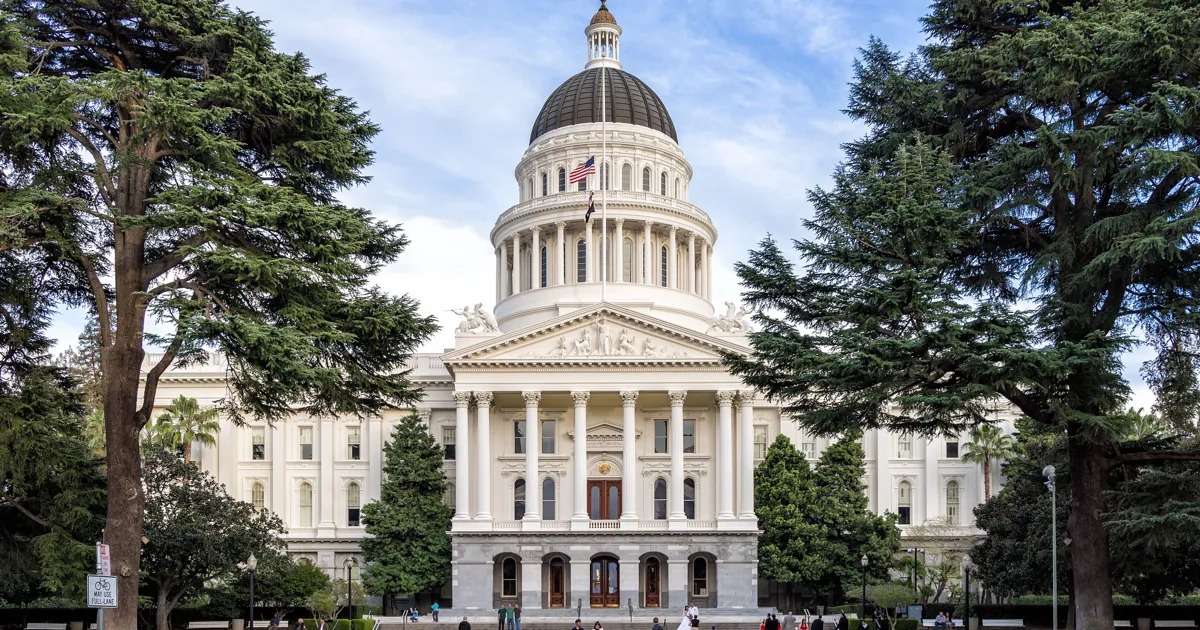
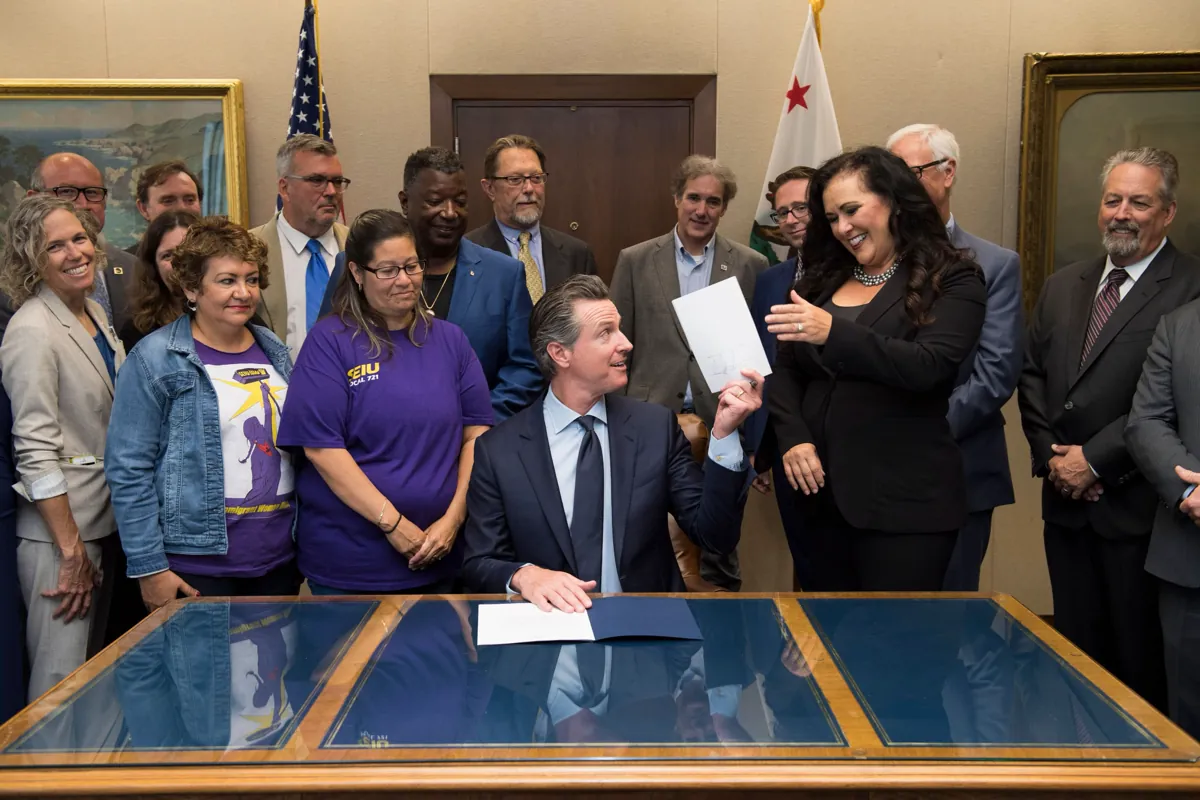
Under the new California AI firing law, employers in the state can't rely solely on an automated system to discipline or fire someone, starting July 1, 2027. Governor Gavin Newsom signed it, SB 947, on September 30, 2026, together with four more bills that touch work and AI: a warning label for AI-driven mass layoffs, two limits on workplace surveillance and new rules for lawyers who use generative AI. Here is what each one requires, who it covers, when it starts and what workers can do. This is a plain-language summary of the bill texts, not legal advice.
Key takeaways
- Signed and dated: the governor's office lists SB 947, SB 951, AB 1331, AB 1883 and SB 574 among the AI bills signed on September 30, 2026.
- No AI-only firings from July 1, 2027: when software is the main basis for discipline or termination, a human must corroborate the decision and the worker gets a written notice.
- AI layoffs get labeled: large employers' 60-day layoff notices must say when AI or automation replaced the jobs, and which tasks it took over.
- Bathrooms and emotions are off limits: employers can't monitor workers in workplace bathrooms, or use AI tools to read emotions or collect neural data.
- Lawyers can't hand the practice of law to AI and must verify every citation they file. Our reading of the state constitution: every bill except SB 947 takes effect January 1, 2027.
What the California AI firing law requires
SB 947, by Senator Jerry McNerney, adds a new part to the Labor Code on "automated decision systems." The bill defines those as computational processes built on machine learning, statistics, data analytics or AI that produce a score, classification or recommendation used to assist or replace human decisions. Spam filters, firewalls, antivirus software, calculators and plain databases are excluded.
The core rules:
- No sole reliance. An employer "shall not rely solely" on such a system when making a disciplinary or termination decision.
- Human corroboration. If the system's output is the primary basis, a human must check the decision against other information, such as supervisor evaluations, personnel files, work product, peer reviews or witness interviews. If the reviewer can't corroborate it, or finds the output inaccurate or misleading, the employer can't use it.
- A written notice. The worker gets a plain-language, stand-alone notice when told of the decision. It must say the employer relied mainly on an automated system, that a human corroborated it, who to contact, and that retaliation is banned.
- A look at your data. The worker can request a "meaningful, objective description" of their own data the system used.
The bill also bars employers from using these systems to infer a worker's protected status, such as race or disability under the state's civil rights law, or to predict and punish workers for exercising their legal rights. McNerney's office calls it the No Robo Bosses Act of 2026, and names the California Federation of Labor Unions, AFL-CIO, as its sponsor.
It is a second attempt. Newsom vetoed an earlier version, SB 7, in October 2025, calling its notice requirements "unfocused." The new bill's notice applies only when a system was the main basis for discipline or firing.
Who is covered and how it's enforced
SB 947 defines an employer broadly: private companies, state and local government, the California State University, labor contractors and farm labor contractors. The University of California is covered only if its regents agree. The text we read sets no minimum company size.
Two carve-outs stand out. A union contract can waive the law, but only if it says so in "clear and unambiguous terms" and itself protects workers from algorithmic management. Work under federal aircraft and defense contracts is exempt where the system is required to meet those contracts.
Enforcement runs through the Labor Commissioner and public prosecutors, with a $500 civil penalty per violation, plus injunctions and attorney's fees in court. Once a worker shows an automated system was used, the employer has to prove it didn't rely mainly on it or that it followed the rules. Retaliating against a worker who uses these rights is illegal.
AI-driven layoffs now need a label
SB 951, by Senator Eloise Gómez Reyes, amends California's WARN Act, the state law that already requires 60 days' notice before a mass layoff, relocation or closure. It applies to sites with 75 or more employees in the past 12 months; a mass layoff is 50 or more people in 30 days.
When a layoff is caused "in whole or in substantial part" by AI or other automation replacing jobs, the notice must now open with the line "This notice is for a technology displacement" and list:
- how many layoffs are due to automation, with job classifications and locations;
- the job functions the technology will take over;
- the type of AI or automated technology responsible.
The state's Employment Development Department must publish a summary of these notices and a quarterly statewide tally. It also owes the Legislature a report on how AI is changing hiring by January 1, 2028. Existing WARN Act penalties, up to $500 per day of violation, still apply.
Bathroom surveillance and emotion tracking are banned
Two Assembly bills limit "workplace surveillance tools," meaning anything that collects worker data other than a person watching: video, audio, time tracking, geolocation and similar systems.
AB 1331, by Assembly Member Sade Elhawary, bars employers from using these tools to monitor workers in a workplace bathroom unless a court orders it. Workers get the right to leave a tracking device behind when they go in, unless the law requires them to stay reachable during breaks. Employers may still log a single entry and exit, and a required ID badge or personal alarm is fine if it records no audio or video and has no built-in AI.
AB 1883, by Assembly Member Isaac Bryan, bans AI-powered surveillance tools that recognize or predict a worker's emotional state, or that collect neural data, meaning readings of the nervous system. Safety uses are still allowed. Both bills carry penalties of up to $500 per violation.
Newsom signed both with a caveat. In his signing message, he asks lawmakers to fix "ambiguities," saying AB 1331 may interfere with systems used to access locked facilities and AB 1883 lacks key definitions.
Lawyers can't hand legal work to AI
SB 574, by Senator Thomas Umberg, says an attorney "shall not delegate the practice of law to generative artificial intelligence." Lawyers who use it must:
- keep confidential and personal client information out of AI systems that aren't restricted to the lawyer's team;
- take reasonable steps to verify outputs, including every case and statute citation, and correct hallucinated content;
- disclose generative AI use to the court for documents they submit.
Court filings can no longer contain citations the responsible attorney hasn't personally verified, and courts can sanction violations. Arbitrators can't delegate any part of their decision to generative AI. Courts are already weighing AI and legal work in other ways, as in the Thomson Reuters v. Ross fair use ruling.
When each law takes effect
| Bill | What it does | Starts |
|---|---|---|
| SB 947 | No AI-only discipline or firing; human check, notice, data access | July 1, 2027 |
| SB 951 | AI layoffs flagged in 60-day WARN notices | January 1, 2027 |
| AB 1331 | No surveillance in workplace bathrooms | January 1, 2027 |
| AB 1883 | No AI emotion recognition or neural data collection | January 1, 2027 |
| SB 574 | Lawyers can't delegate law practice to generative AI | January 1, 2027 |
SB 947 sets its own July 1, 2027 date. The other four don't set one, and none is an urgency bill, so under the state constitution's default rule a law passed in a regular session takes effect on the January 1 after a 90-day wait, which here is January 1, 2027. That date is our reading of the rule, not a date the governor's office published.
What workers can do
This isn't legal advice, but the texts point to a few concrete steps once the laws are in force:
- Keep the notice. If you're disciplined or fired after July 1, 2027 and get an automated-decision notice, it must name a human contact. Use it.
- Ask for your data. You can request a description of the data the system used about you.
- Report problems. The Labor Commissioner's office enforces these rules, and the laws bar retaliation for complaining.
- Check your union contract if you have one, since SB 947 can be waived in a qualifying agreement.
For your specific situation, a labor lawyer or a worker center is the right next call.
Bottom line
The California AI firing law doesn't ban AI from HR. It bans letting software alone decide who gets disciplined or fired, and it gives workers a notice, a human contact and a look at their data. The other four laws arrive sooner, on January 1, 2027 by our reading. Watch for two things before then: whether lawmakers amend the surveillance bills, as Newsom asked, and how employers start labeling AI layoffs. For a broader view of AI rules, see our explainer on the White House AI accord, which, unlike these bills, is voluntary.
FAQ
Does the California AI firing law ban AI in hiring?
No. SB 947's human-review and notice rules cover discipline and termination decisions. Its broader bans, like using automated systems to break labor laws or infer protected status, apply to any use, but the bill doesn't regulate hiring tools in general.
When does SB 947 take effect?
The bill says it becomes operative on July 1, 2027. Until then, it doesn't require anything of employers.
Does SB 947 apply to small businesses?
The text defines an employer as anyone who employs or controls the working conditions of another person, and we found no minimum size in it. The layoff notice rules in SB 951 are different: they only cover sites with 75 or more employees.
Can I sue my employer under SB 947?
The bill names the Labor Commissioner and public prosecutors as enforcers and sets a $500 penalty per violation. Whether a worker can also sue directly is a question for an employment lawyer.